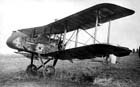
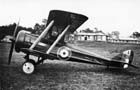
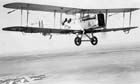
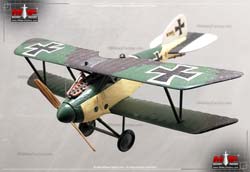
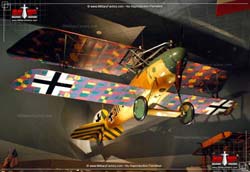
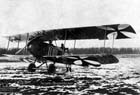
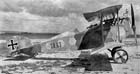
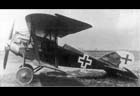
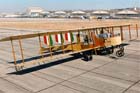
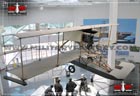
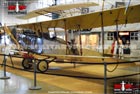
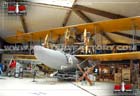
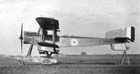
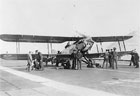
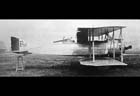
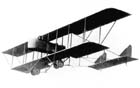
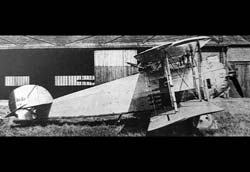
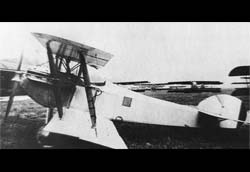
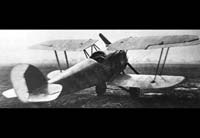
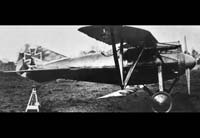
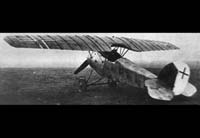
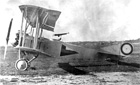
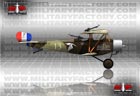
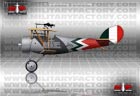
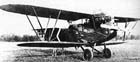
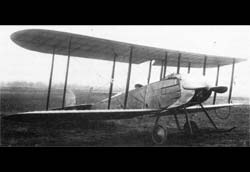
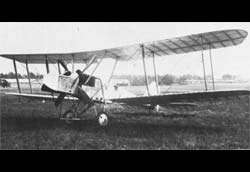
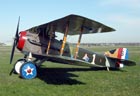
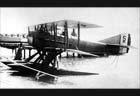
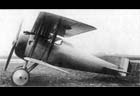
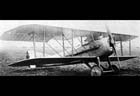
Aircraft from 1910-1919 Covering the War to End All Wars and flying for the love of it.
1
AEG C.IV The C.IV was a twin-seat biplane aircraft produced by the German firm of Allgemeine Elektrizitats-Gesellschaft (or simply "AEG"). The type was primarily fielded as reconnaissance platform from 1916 onwards though it also serv...
1916
2
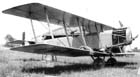
AEG G.IV The AEG G.IV was another successful product of the Allgemeine Elektritzitats Gesellschaft aircraft corporation and was an amalgam of what made the G.I, G.II and G.III successful aircraft in their own right. The system was pro...
1916
3
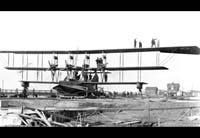
Aeromarine 39 The Aeromarine 39 was a two-seat plane for land-based or seaplane training ordered by the US Navy in 1917. The versatile aircraft was built by the Aeromarine Plane and Motor Company of Keyport, New Jersey. The design was a s...
1916
4
Aeromarine 40 The Aeromarine Model 40 (or simply "Aeromarine 40") was a two-seat floatplane trainer aircraft serving the United States Navy. The aircraft was produced by the Aeromarine Plane and Motor Company of Keyport, New Jersey, and ha...
1918
5
Aerowerke Gustav Otto AGO C.II The C.II was the product of the Aerowerke Gustav Otto aircraft firm, abbreviated as AGO in the designation, and is often regarded as one of the best reconnaissance aircraft of the First World War. Serving just a short span, t...
1915
6
Airco / de Havilland DH.4 With production numbering over 6,000 total units, the Airco / de Havilland DH.4 was another one of Geoffrey de Havilland's successful aircraft designs of the First World War (his legacy would later be solidified with the deve...
1918
7
Airco DH.2 Though not much to look at by today's fighter aircraft standards - let alone World War One-era aircraft standards, the Airco-produced DH.2 would prove to be a rugged and reliable platform. The DH.2 was the product of one Geof...
1916
8
Airco DH.5 With the view afforded the pilots of the DH.2, famed aircraft designer Geoffrey de Havilland set out to create a similar, yet more than capable in terms of performance, off-shoot in the form of the DH.5. The end result would ...
1917
9
Airco DH.9 The AirCo / de Havilland DH.9 was a further revision of the DH.4 bomber. Design was accomplished by the de Havilland company with production handled by the Aircraft Manufacturing Company ("AirCo" or "Airco"). The series was f...
1917
10
Albatros B.II The Albatros B.II was a reconnaissance biplane used in the early years of the First World War, particularly on the German side. The product of design of one Ernst Heinkel, a name that would appear on a variety of aircraft typ...
1914
11
Albatros C.I The Albatros C.I series of aircraft was the next evolution in the brand's reconnaissance aircraft line. Stemming from the development of the production Albatros B.II, the C.I shared many of the common characteristics in the i...
1915
12
Albatros C.III Continuing in the long line of short-term reconnaissance biplane designs, the German Air Force fielded the Albatros C.III in an effort to improve upon the successes of the C.I design. Appearing outwardly nearly identical to t...
1915
13
Albatros C.V The Albatros C.V can, in some ways, be approached as a step backwards in the progression of the C-series as a whole. Though the intent to produce a top-notch reconnaissance biplane aircraft, the system fell short of expectati...
1916
14
Albatros C.X The Albatros production of the C.X model continued the firm's commitment to producing capable reconnaissance biplane aircraft. Supplanting the earlier C-series types before it, the C.X model looked to improved upon an already...
1917
15
Albatros D.I The Albatros series of aircraft is a good study in how aircraft design evolved throughout World War One. The "D" series saw no fewer than five in the D.I, D.II, D.III, D.V and ultimately the D.Va. Such was the newfound weapon...
1916
16
Albatros D.II The Albatros D.II became a further development of the successful Albatros D.I series. The D.I was instrumental in winning back air superiority to the side of the Germans, with their powerful engines and dual-synchronized mach...
1916
17
Albatros D.III Having already found successes in the Albatros D.I and D.II models, designer Robert Thelen sought for more in the way of maneuverability when tackling the new Albatros D.III. This was accomplished by a new unstaggered wing la...
1917
18
Albatros D.V The Albatros D.V series is often regarded as the best of th bunch in regards to the preceding D.I, D.II and the D.III models. By the latter years of 1917, the improved D.III was already showing signs that it had become outcla...
1917
19
Albatros D.Va The Albatros D.Va was a further development in the “D” series and a continuation of the successful D.V series. As with all of the preceding Albatros D models, the D.Va featured only minor improvements in the hopes that the ai...
1917
20
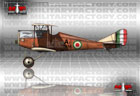
Ansaldo A 1 Balilla (Hunter) The Ansaldo A 1 Balilla ("Hunter") was the first aircraft fighter design of Italian origins. Italian forces consistently used French-designed aircraft in the early years of the war, leading the Ansaldo Italian firm to create ...
1918
21
Armstrong Whitworth FK.8 The Armstrong Whitworth FK.8 model series was an aircraft conceived of by aircraft designer Frederick Koolhoven of Dutch origins. The system turned out to be a most versatile platform used throughout the First World War and p...
1917
22
Aviatik B.I The Aviatik B.I series handled reconnaissance duties for Germany in the early years of the war, serving up to about early 1916 before being replaced by more improved contemporaries. The system was sufficient in the role and w...
1914
23
Aviatik C.I Aviatik (Automobil und Aviatikwerke) of Germany was already involved in aircraft designs from the outset of the war, graduating from the copying of French designs to producing their own new design in the Aviatik B.I. Followin...
1915
24
Aviatik D.I (Berg D.I) The Aviatik D.I served the Austro-Hungarian Empire as a fighter and reconnaissance escort through the final years of World War 1. The system eventually proved a capable combat aircraft with good speed, climbing ability and se...
1917
25
Avro 504 Without knowing it from the outset, the Avro Type 504 series of aircraft would become one of the most produced and influential biplane designs for the United Kingdom, being fielded from 1913 all the way through the early 1930...
1913
26
Blackburn R.T.1 Kangaroo The Kangaroo was the product of the Blackburn Aeroplane and Motor Company, Limited. The design began as a venture in 1916 to which two complete prototypes were produced. These prototype aircraft, known collectively as the Bla...
1918
27
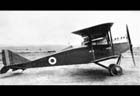
Breguet Br.M5 The Breguet Br.M5 series of biplane bomber was developed from the Breguet Br.M4. The Br.M5 was operated by a crew of two with the pilot seated in the middle of the aircraft and the gunner/observer to the front. Defensive arma...
1915
28
Breguet Bre.14 French aviation design triumphed with the arrival of the Breguet Bre.14 series (sometimes written as Breguet Br.XIV). The aircraft proved to be of the utmost reliability and lethality upon entering the war front in 1916 and w...
1917
29
Bristol F.2 The Bristol F.2 fighter series operated throughout the British Empire for decades, serving through World War 1 and through the interwar years. The system proved a viable fighter platform despite its origination as a reconnais...
1917
30
Bristol Scout The Bristol Scout is a good World War One aircraft study in the "what might have been" category. Born from the pedigree of a racing plane, the Bristol Scout was used in the beginning of the war as an unarmed flying scout, uti...
Caproni Ca.36 The Caproni Ca.36 represented the definitive model in the C-bomber series debuted in 1914 as the C.31. The Ca.36 was a tremendous asset to allied operations against Germany and the Austro-Hungarian Empire and were put into ac...
1917
33
Caudron G.4 The Caudron G.4 series was a twin-engine bomber platform introduced in the early years of World War 1 by the French. The system served initially with the French air force but was put to good use in the hands of British, Itali...
1915
34
Caudron R.11 The Caudron R.11 was initially intended as a reconnaissance platform for the French Air Force but went on to serve the role of fighter escort instead. The system was fielded with a crew of three, was of a large two engine des...
1918
35
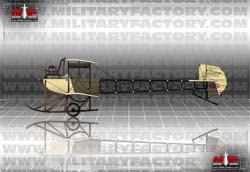
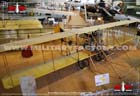
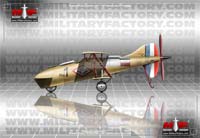
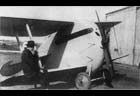
Coanda 1910 This invention by Romanian inventor Henri Coanda amazingly appeared in 1910 as the world's first jet-propelled aircraft - just seven years after the Wright Brothers historic first flight and four years before the great air ba...
1910
36
DFW C.V The DFW C.V series of biplane aircraft was of German design in World War 1. The system was particularly noted for its good handling characteristics, power derived from its Benz engine and strong dogfighting capabilities even ...
1916
37
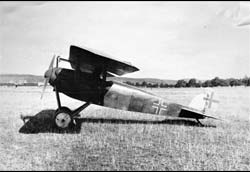
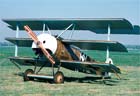
Fokker D.VII The Fokker Dr.VII is now regarded as the best German fighter of the First World War. This biplane design entered development and production towards the end of the war but aircrews still managed some very impressive kill-to-lo...
1918
38
Fokker D.VIII The Fokker D.VIII was a monoplane design and is regarded as one of the best fighters produced by the Germans during the First World War. It combined survivability, firepower and adaptability in a sturdy airframe.
The syst...
1918
39
Fokker Dr.I (Dreidecker) Triplane The Fokker Dr.I ("Dr" for "Dreidecker" meaning "triplane") series is most closely associated with Manfred von Richthofen (aka "the Red Baron") as the triplane aircraft was his chosen mount in the final months of his life, acc...
1917
40
Fokker E (Eindecker) Monoplane As with most aircraft developed during the First World War, the Eindecker series enjoyed a relatively short period of time at the front lines. Aviation technology was ever changing to the point that aircraft designs could be ...
1915
41
Friedrichshafen G.III The Friedrichshafen G.III was a medium bi-plane class bomber utilized by the German Empire in World War 1 and designed by the firm of Flugzeugbau Friedrichshafen GmbH. The G.III was designed to make up for the limitations inh...
1917
42
Halberstadt CL.IV The CL.IV was a further development of the CL.II design, both aircraft a product of Halberstadt Flugzeugwerke of Germany. The CL.II was found to be a perfect platform when used in the close-support role and, as such, the CL.I...
1918
43
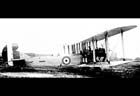
Handley Page H.P. O/400 The O/400 model series by Handley Page aircraft firm was the principle heavy bomber of the RAF by the end of the First World War. The O/400 was directly descended from the previous O/100 model series with the "100" and "400" ...
1918
44
Hansa-Brandenburg B.I (Type D/FD) Ernst Heinkel - whose German firm Heinkel would gain some level of notoriety in World War 2 - designed a series of reconnaissance aircraft for the Hansa-Brandenburg firm during World War 1. The B.I was one such aircraft, an u...
1914
45
Hansa-Brandenburg C.I (Type LDD) The Hansa-Brandenburg C.I was a two-seat reconnaissance aircraft seeing action with the Austro-Hungarian Empire in World War 1. The C.I was another aircraft design by German engineer Ernst Heinkel who had also produced the pr...
1916
46
Hansa-Brandenburg D.I (Type KD) The D.I was another of Ernst Heinkel's aircraft designs for the Hansa-Brandenburg firm (known formally as Hansa und Brandenburgische Flugzeug-Werke) during World War 1. The single-seat aircraft was categorized as a fighter, a...
1916
47
Junkers CL.I The Junkers CL.I was a break-through aircraft design produced in limited quantities in the final year of World War One. The system was an all-metal design proposed and accepted at a time when wood and fabric-constructed plane...
1918
48
Lloyd C.II The Lloyd C.II was a reconnaissance biplane fielded by the Austro-Hungarian Empire in World War 1, with service of the type beginning in 1915. The C.II had a direct origin from the pre-war Lloyd C.I, an competition-winning, t...
1915
49
Lohner B.VII The Lohner B.VII was a two-seat reconnaissance aircraft produced by and for the Austro-Hungarian Empire during World War 1. While a pre-war military design at its core, the B.VII became the definitive combat-worthy form of th...
1915
50
Lohner C.I The Lohner C.I was nothing more than the armed version of the two-seat Lohner B.VII reconnaissance aircraft fielded by the Austro-Hungarian Empire in World War 1. The B.VII itself was a derivative (and improved form) of the p...
Martin MB-1 / Glenn Martin Bomber The Martin MB-1 (also known as the "Glenn Martin Bomber") became the first American-designed heavy bomber type to be purchased in quantity in the First World War, becoming the mainstay of the United States Army Air Service (U...
1918
55
Martinsyde F.4 Buzzard The Martinsyde F.4 "Buzzard" was a biplane aircraft appearing in the late stages of World War 1 and saw service most notably with the Royal Air Force. The aircraft proved to be of sound design and was regarded as one of the f...
1918
56
Morane-Saulnier Type N The Moraine-Saulnier Type N (or simply "Moraine-Saulnier N") was a French fighter aircraft of the First World War. It appeared in limited production numbers (just 49 total aircraft) and was quickly replaced by more advanced p...
1915
57
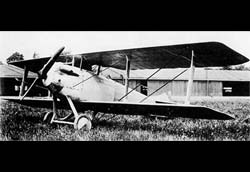
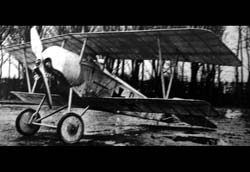
Nieuport Nie.11 (Bebe) The Nieuport 11 "Bebe" (or "Baby" - officially as the Nieuport 11 C1) was in some regards the first "true" Allied fighter of the First World War. Developed from the Bebe racer competition monoplane aircraft, the militarized v...
1915
58
Nieuport Nie.17 The Nieuport 17series of aircraft was the weapon of choice for World War One aces such as Rene Fonck, Albert Ball and Billy Bishop. The XVII was directly developed from the existing and successful 11 "Bebe" platform and would...
1916
59
Nieuport Nie.27 The Nieuport Nie.27 (or simply Nieuport 27) was designed by Gustave Delage and became an advanced trainer and fighter, serving with units of the Aeronautique Militaire, the Royal Flying Corps and the Corpo Aeronatico Militair...
1917
60
Nieuport Nie.28 The French-built Nieuport 28 fighter was the third of the successful trilogy of "Nieuport Fighting Scouts" that included the original Nieuport 11 and 17 models. The 28 model would become the aircraft of choice for aces such a...
1917
61
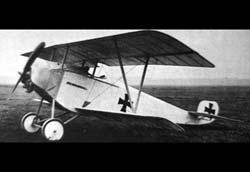
Pfalz D.III The Pfalz D.III was an exceptional aircraft produced in large numbers by Bavaria for Bavarian forces and; later, Imperial German air forces. The D.III biplane was a agile fighter capable of high-speed diving attacks and excel...
1917
62
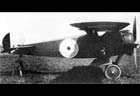
Phonix C.I The Phonix C.I was a rather simplistic two-seat armed reconnaissance fighter utilized by the Austro-Hungarian Empire during World War 1. The system was produced by the Phonix Flugzeug-Werke firm. Phonix Flugzeug-Werke had alr...
1917
63
Phonix D (Series) The Phonix D.I was a single-seat fighter platform developed and produced by the Phonix Flugzeug-Werke firm in Germany. The aircraft was produced in over 200 (sources vary on the total) examples covering the D.I , D.II and the...
1917
64
Royal Aircraft Factory F.E.2 The F.E.2 series of aircraft were produced by the Royal Aircraft Factory and had their origins in the F.E.1, a 1910 design by the Farman Brothers of France. Geoffrey de Havilland joined the Royal Aircraft Factory and brought ...
1915
65
Royal Aircraft Factory F.E.8 The Royal Aircraft Factory F.E.8 ("F.E." for "Fighter Experimental") was developed in 1915 and released as an operational aircraft in 1916. Designed in much the same way as the F.E.2 series before it, the F.E.8 placed the eng...
1916
66
Royal Aircraft Factory S.E.5 The Royal Aircraft Factory S.E.5 ("S.E." for "Scout Experimental") was designed from the outset as an aircraft with a "green" pilot in mind. Additionally, care in the design of the aircraft was taken to make sure it was a pla...
1917
67
Siemens-Schuckert D.I Siemens-Schuckert D.I aircraft were in fact reverse-engineered copies of the French-made Nieuport 11. So desperate was Germany at finding a contender for the Nieuport 11 that it resorted to capturing Nieuport 11's and learni...
1916
68
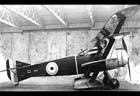
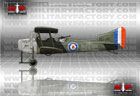
Siemens-Schuckert D.III The Siemens-Schuckert D series of fighters evolved from captured French-made Nieuport 11 aircraft. The D.III appeared as an improved D.I - a design which arrived too late to be of much use and was therefore relegated to train...
1917
69
Siemens-Schuckert D.IV The Siemens-Schuckert D.IV was a further development of the D-series brand, itself a copy of the spectacular French Nieuport 11. Development of the D.IV stemmed from the D.IIc short wing span prototype ordered after productio...
1918
70
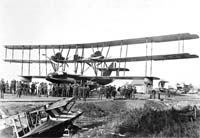
Sikorsky Ilya Mourometz (Series) The Sikorsky Ilya Mourometz series of aircraft were the world's first four-engine bombers in operational service. Igor Sikorsky, his name synonymous in the modern world for the company's line of American helicopters, was alre...
1915
71
Sopwith 1-1/2 Strutter The Sopwith 1-1/2 (one and one half) Strutter was a successful aircraft design fielded in the First World War. The aircraft was principally produced by the British (1,439) but more so by the French to the tune of some 4,200 t...
1916
72
Sopwith Camel Though the Sopwith Camel (the official designation being Sopwith Biplane F.1) was designed as a replacement for the Sopwith Pup, the Camel was in fact a further development of the type. The single-seat biplane fighter provide...
1917
73
Sopwith Dolphin The Sopwith Dolphin was yet another fighter design in the long line of Thomas Sopwith production aircraft during World War 1. The system was produced with the fighter pilot in mind and offered up an unobstructed view from out...
1917
74
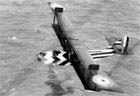
Sopwith Pup The Sopwith Pup appeared in 1916 at a time when the Allies were coming up against what would be known as the "Fokker Scourge" - air supremacy by Germany and her allies across the front. The Pup was based on the Sopwith Strutt...
1916
75
Sopwith Snipe The Sopwith Snipe took all of the components that had made the Sopwith Camel a legend in the middle years of World War 1 and introduced several new features that made this new design the most formidable Allied fighter. Appear...
1917
76
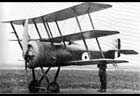
Sopwith Triplane The Sopwith Triplane (dubbed the "Triplehound" by her pilots) was a three wing design built upon the successes of the Sopwith Pup series. The aircraft strayed from the normal aircraft design techniques of the time, where mono...
1916
77
SPAD S.VII (S.7) The SPAD S.VII (or S.7) became one of France's best fighter designs during World War 1. The S.VII was known for many of the elements that made a great dogfighter in the conflict including a sound structure, the ability to wit...
1916
78
SPAD S.XII (S.12) French flying ace Georges Guynemer pushed the idea of a cannon-armed fighter plane after his experiences in aircraft such as the SPAD S.VII. This led the Societe Pour l'Aviation et ses Derives (SPAD) company to develop such a...
1917
79
SPAD S.XIII (S.13) The SPAD S.XIII (S.13) was a further development of the successful SPAD S.VII (S.7) design, the latter eventually becoming outclassed by the newer and better German aircraft designs of World War 1. The S.XIII would prove a su...
1917
80
Standard J-1 The Standard J-1 appeared in the First World War and served the United States Army Air Service in the role of trainer. The system featured two cockpits in tandem, each with an equal set of simple controls on wooden panels for...
1917
81
Ufag C.I The Ufag C.I was a two-seat, single-engine biplane fighter serving the Austro-Hungarian Empire air services. The aircraft made its first appearance in April of 1918 and proved an excellent mount that it quickly warranted a qu...
1918
82
Vickers FB.5 The FB.5 (also known as the "Gunbus") was of a biplane type design for the scouting role. What set the system apart from earlier examples was that this aircraft was the first scout type to be armed. In that way alone, one cou...
1915
83
Voisin Type 5 The French Voisin Type 5 bomber was developed from the proven Voisin III series and saw action in the First World War. Though the III series accomplished what was expected from it, it soon became apparent that aircraft with l...
1915
84
Vought VE-7 Bluebird In 1917 Mr. Birdseye B. Lewis formed an aircraft business with the Vought group, becoming the Lewis & Vought Corporation in the United States. The Vought VE-7 Bluebird, named for Lewis himself, was a biplane designed that sa...
Most photographic images appearing on this site are courtesy of the United States Department of Defense and are approved for public use.
Other images acquired through the public domain.
Digital art work courtesy of Dan Alex. Business Consulting by Kyle Williams
Material presented throughout this website is for historical and entertainment value and should not to be construed as usable for
hardware restoration, maintenance or general operation. Please consult manufacturers for such information.