Military Factory
Military Pay Chart
Global Firepower
Military Industrial Complex
Second World War
Home
Military Pay Scale
Military Ranks
Small Arms
Aircraft
Land Systems
Navy
Education
Military Factory Facebook Logo
flag of United Kingdom

Bristol Scout Biplane Fighter / Fast Reconnaissance Scout (1914)

Authored By Staff Writer | Last Updated: 4/9/2012

The Bristol Scout biplane might have had a better war time record if it had been armed properly at an earlier date.

Find a School Near You
Follow Military Factory on Facebook:
Trending on Military Factory:
Recent Articles:
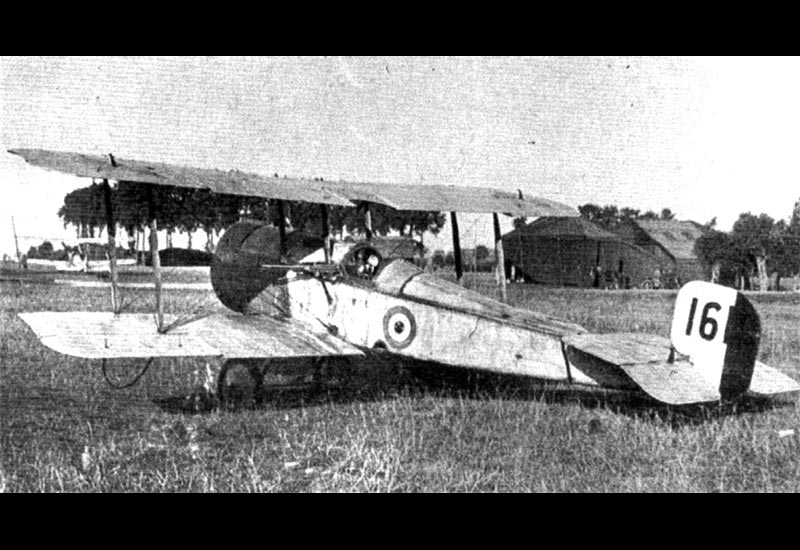
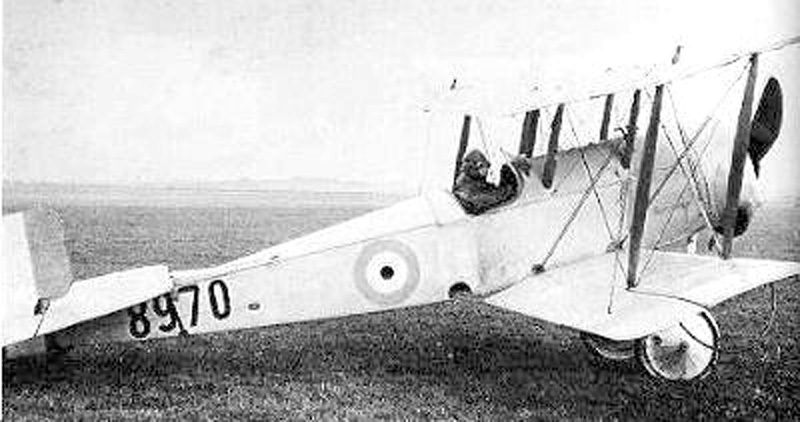
The Bristol Scout was born from a racing aircraft and was, therefore, based upon an excellent performance pedigree. However, since the type was not designed for combat from the outset, as a militarized fighter during The Great War, it would never live up to expectations. At its core, the Bristol Scout was a single-engine, single-seat fighter "scout" development intended to supply ground commanders with an advantageous "eye in the sky". Its major limitation throughout its career was its lack of integrated machine gun armament, finally made possible by the British development of a suitable interrupter gear to allow the weapon to fire through the spinning propeller blades - but much too late for the outgoing Scout series. The Bristol Scout formed some of the first "true" fighter squadrons in aviation history.

Design of the Bristol Scout was regarded as very streamlined while still functional with the initial prototype "Scout A" unveiled in 1913. The aircraft consisted of a well-contoured fuselage with the engine set to the front and a conventional tail section to the rear. The engine powered a two-bladed wooden propeller and was housed under a lightly armored compartment. The wings were of a biplane configuration for maximum lift and handling while being situated over and under the forward fuselage. Each wing side sported parallel struts with single bays and applicable wiring. The open-air cockpit was held just under and aft of the upper wing assembly with generally adequate views from the cockpit save for the forward-set engine and large wing assemblies - though this was typical of all biplane aircraft of the time. The empennage was completed in a traditional fashion through use of a single vertical tail fin coupled with a pair of horizontal tailplanes. The undercarriage was nothing more than a reinforced strutted structure featuring two large main landing wheels with a tail skid to support the rear. Power was provided for by a single rotary piston engine of 80 horsepower. This supplied the mount with a top speed of 100 miles per hour, a service ceiling of 14,000 feet and an endurance of 2.5 hours. Rate-of-climb averaged 10,000 feet in 18.5 minutes. First flight of the Bristol Scout (Scout A) was on February 23rd, 1914.

As a "scout" aircraft, the Bristol Scout was intended for reconnaissance sorties over or near enemy-held territories, recording positions and movements for dissection by warplanners later on. An early militarized evaluation form - the Bristol "Scout B" - was armed rather crudely with side-bolted service rifles angled in such a way as to clear the propeller blades when firing. It was also not out of the realm of possibility for pilots to take with them personal small arms into the cockpit as needed and engage in a primitive form of "dogfighting". It was only later that a 7.7mm Lewis machine gun armament on a newly-designed mount was trialed with success, resulting in the downing of two enemy aircraft, and earning pilot Captain Lanoe Hawker the first Victoria Cross for aerial combat. The Scout B was fitted with a Gnome Lambda rotary piston engine of 80 horsepower.

This result encouraged development of a new mark - the Bristol "Scout C" (also "Type 1 Scout C") - to be armed with a standardized mounting and 1 x 7.7mm Lewis machine gun along the left side of the fuselage away from the spinning propeller arc. Some were also finished with their Lewis guns fielded across the upper wing assembly to clear the propeller (typical of pre-interrupter Allied aircraft). Several attempts were made with early versions of propeller interrupter gear but the technology was never perfected before the end for the Bristol Scout. The Scout C was produced in approximately 50 examples and included an optional Le Rhone rotary piston engine of 80 horsepower over the original Gnome Lambda series during manufacture.

The first combat Bristol Scouts were fielded in February of 1915 and assigned as escort fighters to squadrons fielding the larger, two-man aircraft. Inevitably, both the British Royal Air Force and Royal Navy would utilize the Bristol Scout type aircraft in their respective inventories as such was the value of capable flying mounts of the period. Targets for Bristol Scout pilots ran the gamut of enemy aircraft (patrol, escort, interception), bombers, observation balloons, ground-based "targets of opportunity" and even the mighty - though seriously vulnerable - Zeppelins which regularly patrolled airspaces. For the latter, pilots would position their aircraft over the top of the Zeppelin, out of the firing arcs of the various defensive machine guns, and simply drop high-explosive "darts", of flechettes atop the Zeppelin's soft frames, hopefully detonating and destroying the enemy aircraft in the process.

The original Bristol Scout C was followed into production by the improved and definitive Bristol "Scout D" in November of 1915. About 210 examples of this type were produced and encompassed four subvariants known as Type 2, Type 3, Type 4 and Type 5. Changes to the family line included revised wings and tail surfaces as well as redesigned engine cowls. British ace Albert Ball managed four kills over the course of one in one week from a Scout D aircraft and appreciated the type's capabilities in the air.

In all, the Bristol Scout equipped 27 British Royal Flying Corps squadrons while also serving with the Royal Naval Air Service. It was also featured within two Australian squadrons as well as within the inventory of the Greek Navy for a time. The only other notable Bristol Scout production form became a pair of converted two-seat trainers designated as the Bristol S.2A.

Only about 370 Bristol Scouts were produced during a short operational tenure for technology during the war improved at such a pace that newly-minted mounts were quickly outclassed by ever-newer designs - sometimes within weeks of debut. By the middle of 1916, the Bristol Scout was on its way out before falling to the pages of history altogether. Discontinued Bristol Scouts were relegated to training duties thereafter while some survived the war into the 1920s.
Text ©2003-2013 www.MilitaryFactory.com • All Rights Reserved • No Reproduction Permitted
MilitaryFactory.com does NOT sell equipment/weaponry. Material presented throughout this website is for historical and entertainment value and should not to be construed as usable for hardware restoration, maintenance or general operation. Please consult manufacturers for such information. Our disclaimer. Email corrections / Comments to MilitaryFactory at Gmail dot com.
Picture of Bristol Scout
Pic of the Bristol Scout
View All Images (2)

Specifications for the
Bristol Scout
Biplane Fighter / Fast Reconnaissance Scout


Country of Origin: United Kingdom
Manufacturer: Bristol - UK
Initial Year of Service: 1914
Production: 370


Focus Model: Bristol Scout
Crew: 1


Length: 19.75ft (6.02m)
Width: 27.33ft (8.33m)
Height: 8.50ft (2.59m)
Weight (Empty): 761lbs (345kg)
Weight (MTOW): 1,250lbs (567kg)


Powerplant: 1 x Le Rhone rotary piston engine generating 80 horsepower.


Maximum Speed: 100mph (161kmh; 87kts)
Maximum Range: 0miles (0km)
Service Ceiling: 13,999ft (4,267m; 2.7miles)
Rate-of-Climb: 540 feet per minute (165m/min)


Hardpoints: 0
Armament Suite:
ORIGINAL (Scout D):
1 x 7.7mm Lewis machine gun (various small arms also utilized).

Scout D:
1 x 7.7mm Vickers machine synchronized to fire through the spinning propeller blades.

OPTIONAL:
1 x Hand-Dropped Explosive "Dart" for anti-Zeppelin sorties.


Variants:
Scout A - Prototype Model


Scout B - Militarized Evaluation Model

Scout C - Initial Production Model; appearing in February of 1915; various personal small arms utilized for attack/defense; later addition of 1 x 7.7mm Lewus machine gun.

Scout D - Improved Bristol Scout; appearing in November of 1915; fitting 1 x 7.7mm Vickers machine gun in sychronized mounting.


Operators: Australia; Greece; United Kingdom

ALL AIRCRAFT CATEGORIES

BY DECADE:


1900 to 1909
1910 to 1919
1920 to 1929
1930 to 1939
1940 to 1949
1950 to 1959
1960 to 1969
1970 to 1979
1980 to 1989
1990 to 1999
2000 to 2009
2010 to 2019
2020 to 2029
VIEW ALL
Compare Aircraft


BY TYPE:


Anti-Submarine Warfare (ASW)
Attack Helicopters
Bomber Aircraft
Medium Bombers
Heavy Bombers
Close-Air Support (CAS)
Commercial Aircraft
Dive Bombers
Electronic Warfare Aircraft (EWA)
Experimental / X-Planes
Fighter Aircraft
Floatplane Aircraft
Flying Boat Aircraft
Aerial Refueling Tankers
Helicopters (ALL)
Interceptor Aircraft
Multi-Role Aircraft
Navy Carrier Aircraft
Night Fighters
Reconnaissance / Scout
Search & Rescue (SAR)
Scout Helicopters
Special Purpose
Torpedo Bombers
Trainer Aircraft
Transport Aircraft
Transport Helicopters
Unmanned Aerial Vehicles (UAVs)
Unmanned Combat Air Vehicles (UCAVs)


COLLECTIONS:


4th Generation Fighter Aircraft
5th Generation Fighter Aircraft
US X-Planes
Classic US Warbirds
French Military Helicopters
Grumman "Cats"
Howard Hughes Aircraft
Indian Air Force
Israeli Air Force
Libyan Aircraft
Modern Chinese Aircraft
Modern Chinese Fighters
Modern Military Aircraft
Modern North Korean Aircraft
Modern Trainer Aircraft
Modern US Aircraft
Mikoyan Aircraft
Sukhoi Aircraft
Syrian Aircraft
Top 10 Fighter Aircraft of All Time


AIRCRAFT BY CONFLICT:


Arab-Israeli War (1948)
Cuban Missile Crisis (1959-1962)
Falklands War (1982)
Indo-Pak War (1965, 1971)
Iran-Iraq War (1980-1988)
Lebanon War (1982)
Operation Allied Force (1999)
Operation Desert Storm (1991)
Six Day War (1967)
Spanish Civil War (1936)
Soviet-Afghan War (1979-1989)
Yom Kippur War (1973)


MISCELLANEOUS:


Aircraft Cockpits
Aircraft Manufacturers List
Aircraft Timeline

WORLD WAR 2:


1939 Aircraft
1940 Aircraft
1941 Aircraft
1942 Aircraft
1943 Aircraft
1944 Aircraft
1945 Aircraft
1946 Aircraft
Australian Aircraft
Battle of Britain Aircraft
Bombers
Four-Engine Bombers
British Aircraft
British Bombers
British Transports
Dive Bombers
Canadian Aircraft
Fighters
Chinese Aircraft
French Aircraft
German Aircraft
German Fighters
German Flying Boats
German Jets
Secret Weapons of the Luftwaffe
Italian Aircraft
Imperial Japanese Aircraft
Imperial Japanese Fighters
Mitsubishi Bombers
Navy Aircraft
Pearl Harbor
Polish Aircraft
Romanian Aircraft
US Aircraft
US Bombers
US Navy Aircraft
Soviet Aircraft
Torpedo Bombers
Transport Aircraft
Tuskegee Airmen Aircraft
W.A.S.P. Aircraft
WW2 Aircraft Ranked by Speed
VIEW ALL


WORLD WAR 1:


1914 Aircraft
1915 Aircraft
1916 Aircraft
1917 Aircraft
1918 Aircraft
Aircraft Timeline
Austro-Hungarian Aircraft
Bomber Aircraft
British Aircraft
Fighters
Flying Boats
French Aircraft
Imperial German Aircraft
Italian Aircraft
Scout Aircraft
Russian Empire Aircraft
US Aircraft
WW1 Aircraft Ranked by Speed
VIEW ALL


KOREAN WAR:


Australian Aircraft
Korean War Aces
Korean War Jets
North Korean Aircraft
US Military Aircraft
VIEW ALL


VIETNAM WAR:


Helicopters
North Vietnam Air Force
US Airpower
VIEW ALL


COLD WAR:


1950s French Aircraft
British V-Bombers
Cold War Bombers
Soviet Aircraft
Soviet Bombers
Soviet Interceptors
Soviet Helicopters
Strategic Air Command
US Aircraft
US Bombers
US Interceptors
VIEW ALL

Site Disclaimer | Privacy Policy | Site Map | MF Origins


©2013 www.MilitaryFactory.com • Content ©2003-2013 MilitaryFactory.com • All Rights Reserved • Site Contact Email: militaryfactory at gmail dot com. The "Military Factory" name and MilitaryFactory.com logo are registered ® trademarks and protected by all applicable domestic and international intellectual property laws.


Top MF Stuff: 2013 Military Pay Scale | Military Ranks | WW2 Weapons | Sniper Rifles | Kts to Mph | WW1 Aircraft | Automatic Rifles | Aircraft Cockpits | Vietnam War Weapons | Main Battle Tanks | Submachine Guns | Shotguns | French Military Victories


Most photographic images appearing on this site are courtesy of the United States Department of Defense and are approved for public use. Other images acquired through the public domain. Digital art work courtesy of Dan Alex. Business Consulting by Kyle Williams. Material presented throughout this website is for historical and entertainment value and should not to be construed as usable for hardware restoration, maintenance or general operation. Please consult manufacturers for such information.


eXTReMe Tracker