Military Factory
Military Pay Chart
Global Firepower
Military Industrial Complex
Second World War
Home
Military Pay Scale
Military Ranks
Small Arms
Aircraft
Land Systems
Navy
Education
Military Factory Facebook Logo
flag of Soviet Union

Mikoyan MiG-27 (Flogger) Ground Attack Aircraft (1975)

Authored By Dan Alex | Last Updated: 5/3/2011

The MiG-27 produced a full strike version of the successful MiG-23 interceptor.

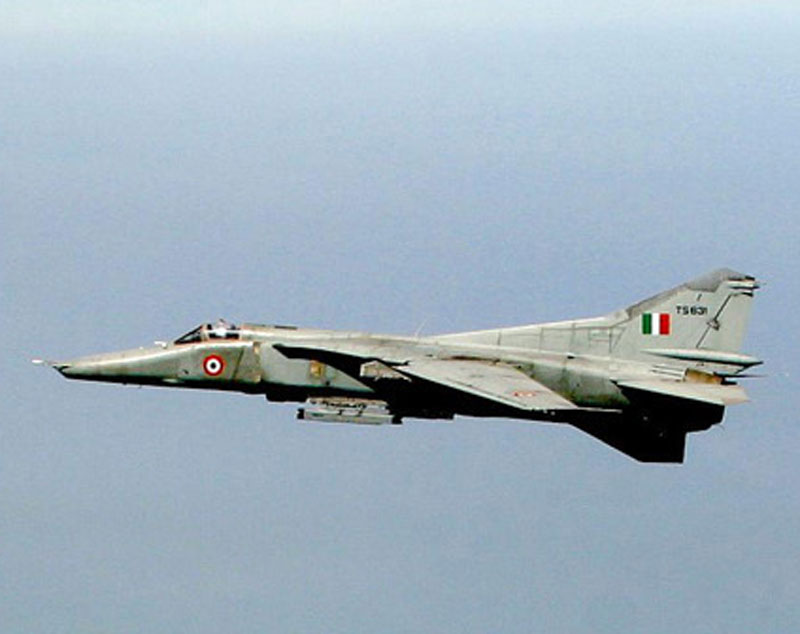
The Mikoyan MiG-27 "Flogger" was derived from the successful MiG-23 "Flogger" interceptor and made into a dedicated ground attack aircraft. The swing-wing capabilities of the original Flogger lent itself well to the low-level activities and short take-off and landings inherent in the close-support role. However, the MiG-27 failed to become as numerous as the MiG-23 before it for other capable Soviet systems (such as the MiG-23 fighter-bomber versions and the adaptable Sukhoi Su-25 "Frogfoot") more than made up the same role. As such, production was restricted and the operators list was limited to a few Warsaw Pact nations and some Third World allies. Of note was the license construction/production of the MiG-27 by HAL of India.

Aside

The MiG-27 designation was used by the Mikoyan-Gurevich firm some time before, this occurring while trying to fulfill another Soviet requirement for a dedicated low-level close-support aircraft. While this aircraft went on to become the Sukhoi Su-25 "Frogfoot", the MiG-27 designation resurfaced again in the dedicated ground-attack version of the MiG-23 interceptor. The MiG-27 retained the same NATO codename of "Flogger" as the MiG-23.

Development

Development of the Flogger fighter always included provision for making it a dedicated strike version. The original MiG-23 was an interceptor at heart, built on straight-line speed and designed to engage in air-to-air combat with ground strike as a secondary (albeit limited) role. The MiG-23 entered service in the early 1970s and replaced the aging MiG-21 "Fishbeds" in their air defense roles. The MiG-21, while fast and capable, suffered from having short range and a limited ordnance capability. The arrival of the MiG-23 remedied that.

Though the MiG-23 was converted into a modified fighter-bomber version, it still retained much of its "fighter" origins and served as more of an interim design than the vision Soviet authorities had. However, the aircraft was cheap to produce, robust, reliable and - with some modifications - could be made adapted into a more dedicated role. The result was the MiG-23BM "Experimental" which ultimately became the MiG-27 "Flogger".

The new MiG-27 proved a promising endeavor that the type was put into production straight from the drawing boards. First flight was achieved in 1972. The first available examples were shipped to Soviet air groups based in Germany as a show of force against NATO forces there.

Walk Around

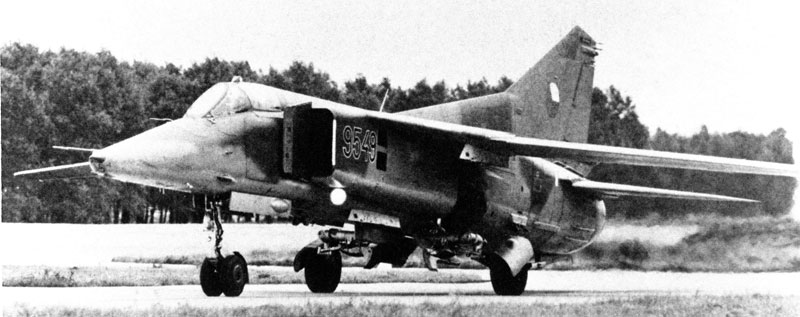
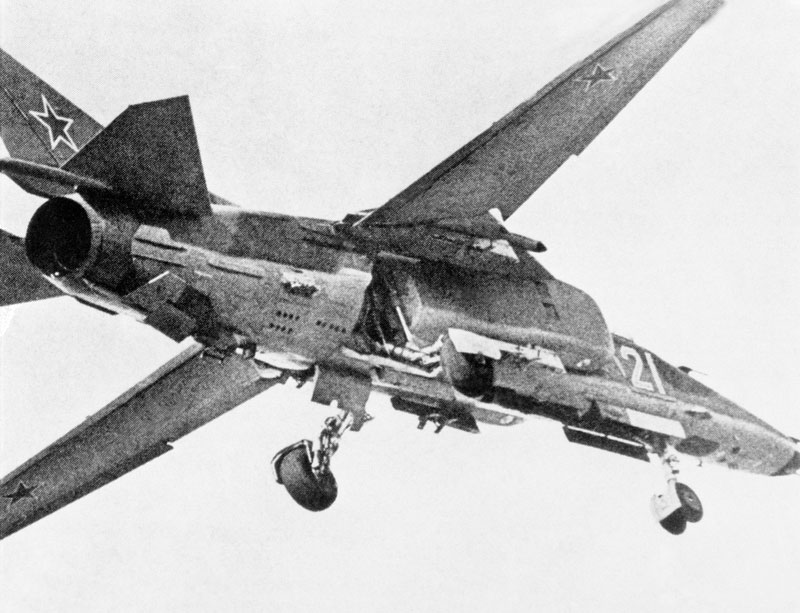
The MiG-27 retained much of the external features of the MiG-23 before it. The most discernable piece became the redesigned nose cone. As a low-level strike fighter, the MiG-27 had little need for an advanced air-to-air radar as found in the interceptor. The new radar-less nose assembly sported a sleeker look and promoted better look-down views from the cockpit. The cockpit itself was given a new canopy with less framing and a raised pilot seat position. The windscreen was armored as were the cockpit walls to coincide with the new Flogger's low-level role. The engine was a simplified form of the interceptor brand and fitted in a revised rear fuselage with a two-stage afterburner nozzle. An extra underfuselage hardpoint was also introduced.

The wings remained the "bread-and-butter" of the new Flogger. Three wing sweep positions could be called upon in-flight to assist in three distinct modes of flying. The fully-extended wing sweep afforded good low-level/low-speed control during take-off and landing as it induced more drag and generated increasing lift. The intermediate wing sweep mode was a balanced setting used during the normal cruise state. The extreme wing sweep was used in the high-performance role for it promoted a smaller forward area profile and less drag to achieve and maintain top straight-line speeds at Mach 1+. The wings were high-mounted along the upper portion of the fuselage and extended from fixed wing "gloves" emanating from the upper fuselage. The upper fuselage also housed the heavy and complicated mechanism needed to control the wing sweep.

As a departure from previous Mikoyan-Gurevich designs, the MiG-27 featured side-mounted rectangular intakes to make room for the nose cone at front. The inlets were fixed and fed the single Soyuz powerplant situated in the middle of the fuselage. A raised fuselage spine blocked most of the critical rear view from the cockpit and led up into a tapered swept vertical tail fin. The vertical tail fin was balanced by a ventral tail fin also with sweep. The horizontal tailplanes were high-mounted and straddled either side of the jetpipe.

Variants

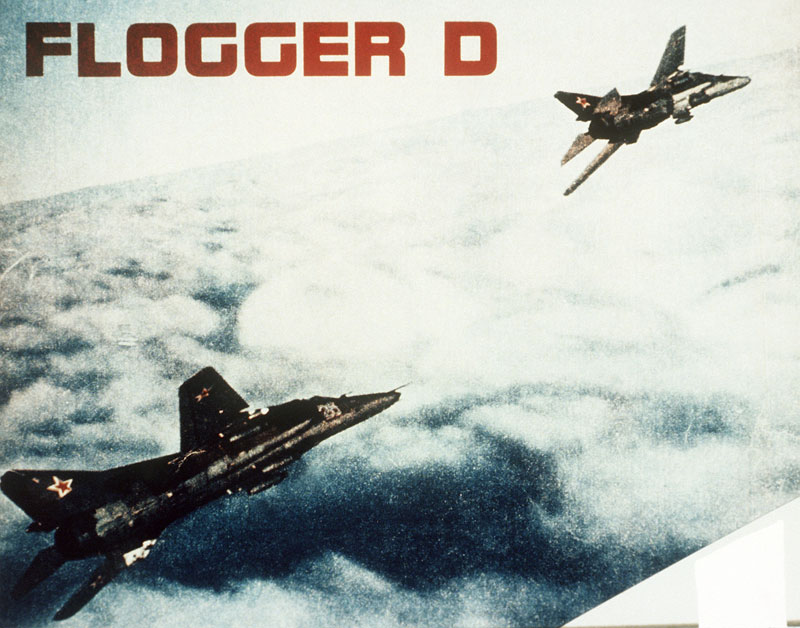
The MiG-27 was produced in only two major variants covered under the NATO codenames of "Flogger-D" and "Flogger-J", though each held their own notable sub-variants.

The MiG-27 was the base "vanilla" production model designation and sported a revised canopy (no central vertical frame thus improving vision out of the cockpit and also simplifying the ejection process). Special electro-optical and radio gear was installed in bullet fairings on the wing gloves and the original MiG-23 twin-barreled 23mm cannon was replaced by a six-barreled GSh-6-23M 23mm Gatling gun.

The MiG-27D was a dedicated nuclear strike derivative that was kept on stand-by to guard against any perceived nuclear air attack (the Americans had developed their long-range, swing-wing, nuclear-capable General Dynamics FB-111 Aardvark bomber by then). These Floggers were fitted with the RSBN-6S nav-attack system for the particular job at hand. Production began in 1973 and lasted until 1977 to which some 560 total examples were produced.

The MiG-27 and the MiG-27D fell under the NATO "Flogger-D" codename.

The MiG-27M was an upgrade to the Flogger-D production line. The electro-optical and radio-frequency heads of the original models were removed and the laser rangefinder window in the nose was enlarged. The type originally retained the GSh-6-23M Gatling gun but later gave way to a more powerful GSh-6-30 Gatling gun of 30mm caliber. The Electronic CounterMeasures (ECM) suite was upgraded to counter new ground-based threats and a new PrNK-23K navigation/attack system was introduced. The new suite enabled greater automation to cut down on pilot responsibility and fatigue. These new upgrades only netted a production total of 150 aircraft, with construction taking place from 1978 to 1983. Sri Lanka became a client of this Flogger type by way of Ukraine and put them into action against Tamil Tiger elements.

The MiG-27K became the final Soviet/Russian production ground attack Flogger. It incorporated an onboard Fone-brand laser designator and could now be used in conjunction with new TV-guided ordnance. The nav-attack system revolved around the PrNK-23K. Like the MiG-27M before it, the MiG-27K also upgraded its early 23mm Gatling gun with the more powerful and potent 30mm system and the weapons suite as a whole was revised and customized for easier weapons selection and delivery. This new Flogger allowed for actions in day-or-night and in bad weather, proving an accurate bombing platform as a result. The Radar Warning Receiver (RWR) and its applicable Electronic CounterMeasures suite were enhanced to auto-respond to incoming threats. Some 200 K-models were ultimately produced. The Fone laser rangefinder eventually gave way a newer Klen-brand system.

The MiG-27K was powered by a single Khatchaturov R-29-300 afterburning turbojet engine developing up to 18,300lbf on standard thrust and up to 27,600lbf with afterburner. Top speed was listed at approximately Mach 1.77 at 26,000 feet altitude. Ferry range was limited to 1,550 miles while the service ceiling was restricted to 45,900 feet. Rate-of-climb was 39,400 feet-per-minute.

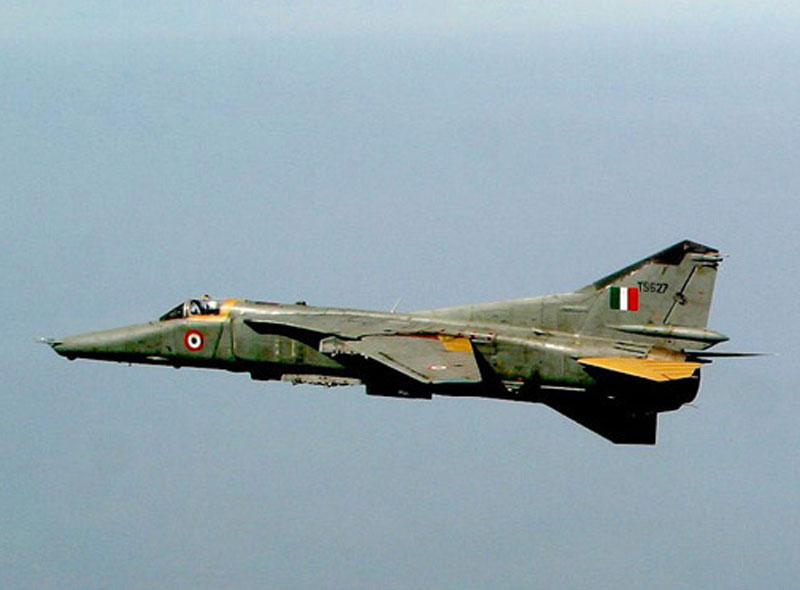
The MiG-27 was developed into an export model by way of the MiG-27L. India was the major customer to which Mikoyan and the Soviet government sent the aircraft in parts to the South Asian nation for indigenous production. The MiG-27L was based on the MiG-27M and differed only in a revised Infra-Red Search and Track (IRST) housing under the nose. HAL of India handled construction of some 130 total examples.

India was also the recipient of an indigenous upgrade program that produced the improved MiG-27H in 1988. MiG-27Ls were used in the upgrade program and fitted with French-based avionics. The aircraft sported a lighter operating weight and included a revised cockpit introducing twin MFDs (Multi-Function Displays), GPS navigation and a new HUD (Heads-Up Display) among other modern additions. There was also an optional French-based Agave or Russian-based Komar radar system to be housed in the nose radome for improved air-to-air and anti-ship capability as needed. The upgrade program covered some 140 to 180 aircraft.

The NATO codenames of "Flogger-J" encompassed the MiG-27M, MiG-27L and MiG-27H. The MiG-27K took on the similar NATO codename of "Flogger-J2". All Flogger-Js have the identifiable bullet fairing on the wing glove as well as wing leading edge extensions. Their ILS antenna have been moved from the nose to the port side of the forward fuselage.

Conclusion

Despite the success of the original MiG-23 interceptor model, the MiG-27 did not see similar results through overseas sales. Only some 1,075 MiG-27s made it into circulation with production running from 1970 to 1986. The MiG-27 saw its first combat in actions over Afghanistan during the Soviet invasion in the 1980s. Deployment was at regiment strength to Shindand and consisted of the MiG-27D mark. The aircraft was called to actions against the American-backed Mujahedeen rebels.

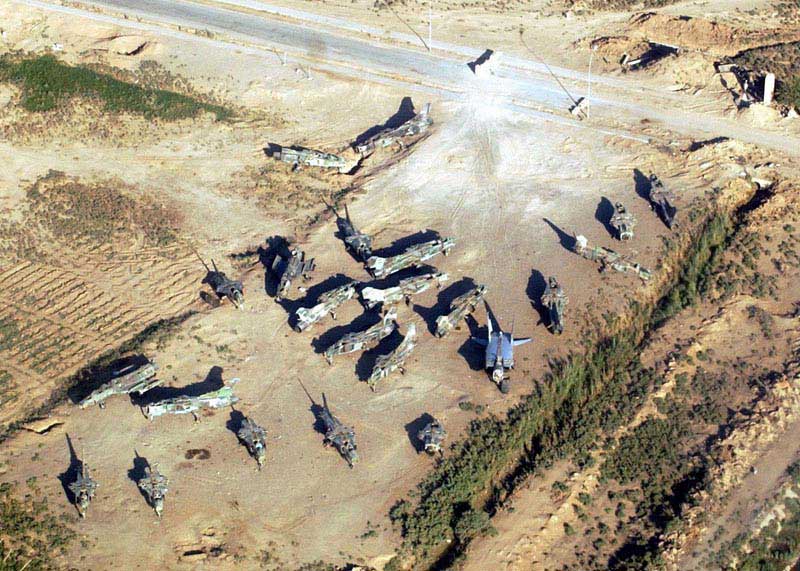
As of this writing, current operators of the MiG-27 Flogger series remain Cuba, Iran, Kazakhstan and Sri Lanka. Former operators were India (retired in 2008 with the Indian Air Force), Ukraine and the Soviet Union/Russia. Russia still maintains a bevy of Floggers in storage and reserve though the last were retired from operational status in the 1990s.

Due to its redesigned nose over that of the MiG-23 interceptor, pilots affectionately referred to their MiG-27s as "Platypus".
Text ©2003-2013 www.MilitaryFactory.com • All Rights Reserved • No Reproduction Permitted
MilitaryFactory.com does NOT sell equipment/weaponry. Material presented throughout this website is for historical and entertainment value and should not to be construed as usable for hardware restoration, maintenance or general operation. Please consult manufacturers for such information. Our disclaimer. Email corrections / Comments to MilitaryFactory at Gmail dot com.
Picture of Mikoyan MiG-27 (Flogger)
Pic of the Mikoyan MiG-27 (Flogger)
Image of the Mikoyan MiG-27 (Flogger)
View All Images (7)

Specifications for the
Mikoyan MiG-27 (Flogger)
Ground Attack Aircraft


Country of Origin: Soviet Union
Manufacturer: Mikoyan OKB - Soviet Union
Initial Year of Service: 1975
Production: 1,075


Focus Model: Mikoyan MiG-27K (Flogger-J2)
Crew: 1


Length: 56.04ft (17.08m)
Width: 45.83ft (13.97m)
Height: 16.40ft (5.00m)
Weight (Empty): 26,257lbs (11,910kg)
Weight (MTOW): 98,663lbs (44,753kg)


Powerplant: 1 x Soyuz R-29B-300 turbofan engine with afterburner generating 25,350lbs of thrust.


Maximum Speed: 1,171mph (1,885kmh; 1,018kts)
Maximum Range: 336miles (540km)
Service Ceiling: 45,932ft (14,000m; 8.7miles)
Rate-of-Climb: 39,370 feet per minute (12,000m/min)


Hardpoints: 7
Armament Suite:
ORIGINAL STANDARD:
1 x 23mm GSh-6-23M six-barreled Gatling gun

STANDARD:
1 x 30mm GSh-6-30 six-barreled Gatling gun

OPTIONAL:
Up to 8,800lbs of mission-specific ordnance across seven hardpoints (1 x centerline, 4 x fuselage and 2 x wing glove stations):

Air-to-Air Missiles
Air-to-Surface Missiles
Rocket Pods
Gun Pods (SPPU-22 and SPPU-6 series)
General Purpose Drop Bombs


Variants:
MiG-23BM "Experimental - Interceptor Conversion Model to fighter-bomber form on which the MiG-27 is based on.


MiG-27 (Flogger-D) - Base Production Series Designation; revised canopy; fitted with radio and electro-optical equipment; armored windscreen and cockpit sides; simpler engine and exhaust nozzle; additional hardpoint; GSh-6-23M Gatling gun; fixed intake inlets; terrain avoidance radar; revised nose radome; target acquisition systems installed.

MiG-27D (Flogger-D) - Nuclear Strike Model; fitted with PSBN-6S nav-attack system for use with specialized nuclear-tipped weaponry; production from 1973 to 1977; 560 examples produced.

MiG-27M (Flogger-J) / "Bahadurs"- Upgraded Flogger-D types; deletion of dielectric and radio-frequency heads above wing gloves; GSh-6-23M Gatling gun later replaced by 30mm GSh-6-30 six-barrel cannon system in underfuselage gunpack; improved Electronic CounterMeasures (ECM) suite; installation of new PrNK-23K nav-attack system increasing automation; production from 1978 to 1983; 150 examples produced; also produced in India as the Bahadurs through HAL.

MiG-27L (Flogger-J)/ "Bahadurs" - Indian Export Variant (license assembly) of the MiG-27M; based on the MiG-27M production model; revised Infra-Red Search and Track (IRST) fairing; 130 examples delivered and assembled (in India).

MiG-27H (Flogger-J) - Indian Flogger Upgrade; French-based avionics; reduced operational weight; improved air-to-air capability; limited anti-ship capability; revised avionics suite; 2 x Multi-Function Displays (MFDs); GPS/GLANOSS navigation system; improved Electronic Warfare suite; installation of HUD camera; French-based Agave OR Russian-based Komar radar as required; conversions of at least 140 aircraft from existing MiG-27ML models to be handled indigenously.

MiG-27K - Final Soviet/Russian Production Model; laser designator; provision for TV-guided weaponry; GSh-6-30 gun system replaced original GSh-6-23M gun pack; 200 examples produced.


Operators:
Cuba; India; Iran; Kazakhstan; Russia; Soviet Union; Sri Lanka; Ukraine

ALL AIRCRAFT CATEGORIES

BY DECADE:


1900 to 1909
1910 to 1919
1920 to 1929
1930 to 1939
1940 to 1949
1950 to 1959
1960 to 1969
1970 to 1979
1980 to 1989
1990 to 1999
2000 to 2009
2010 to 2019
2020 to 2029
VIEW ALL
Compare Aircraft


BY TYPE:


Anti-Submarine Warfare (ASW)
Attack Helicopters
Bomber Aircraft
Medium Bombers
Heavy Bombers
Close-Air Support (CAS)
Commercial Aircraft
Dive Bombers
Electronic Warfare Aircraft (EWA)
Experimental / X-Planes
Fighter Aircraft
Floatplane Aircraft
Flying Boat Aircraft
Aerial Refueling Tankers
Helicopters (ALL)
Interceptor Aircraft
Multi-Role Aircraft
Navy Carrier Aircraft
Night Fighters
Reconnaissance / Scout
Search & Rescue (SAR)
Scout Helicopters
Special Purpose
Torpedo Bombers
Trainer Aircraft
Transport Aircraft
Transport Helicopters
Unmanned Aerial Vehicles (UAVs)
Unmanned Combat Air Vehicles (UCAVs)


COLLECTIONS:


4th Generation Fighter Aircraft
5th Generation Fighter Aircraft
US X-Planes
Classic US Warbirds
French Military Helicopters
Grumman "Cats"
Howard Hughes Aircraft
Indian Air Force
Israeli Air Force
Libyan Aircraft
Modern Chinese Aircraft
Modern Chinese Fighters
Modern Military Aircraft
Modern North Korean Aircraft
Modern Trainer Aircraft
Modern US Aircraft
Mikoyan Aircraft
Sukhoi Aircraft
Syrian Aircraft
Top 10 Fighter Aircraft of All Time


AIRCRAFT BY CONFLICT:


Arab-Israeli War (1948)
Cuban Missile Crisis (1959-1962)
Falklands War (1982)
Indo-Pak War (1965, 1971)
Iran-Iraq War (1980-1988)
Lebanon War (1982)
Operation Allied Force (1999)
Operation Desert Storm (1991)
Six Day War (1967)
Spanish Civil War (1936)
Soviet-Afghan War (1979-1989)
Yom Kippur War (1973)


MISCELLANEOUS:


Aircraft Cockpits
Aircraft Manufacturers List
Aircraft Production
Aircraft Timeline

WORLD WAR 2:


1939 Aircraft
1940 Aircraft
1941 Aircraft
1942 Aircraft
1943 Aircraft
1944 Aircraft
1945 Aircraft
1946 Aircraft
Australian Aircraft
Battle of Britain Aircraft
Bombers
Four-Engine Bombers
British Aircraft
British Bombers
British Transports
Dive Bombers
Canadian Aircraft
Fighters
Chinese Aircraft
French Aircraft
German Aircraft
German Fighters
German Flying Boats
German Jets
Secret Weapons of the Luftwaffe
Italian Aircraft
Imperial Japanese Aircraft
Imperial Japanese Fighters
Mitsubishi Bombers
Navy Aircraft
Pearl Harbor
Polish Aircraft
Romanian Aircraft
US Aircraft
US Bombers
US Navy Aircraft
Soviet Aircraft
Torpedo Bombers
Trainer Aircraft
Transport Aircraft
Tuskegee Airmen Aircraft
W.A.S.P. Aircraft
WW2 Aircraft Ranked by Speed
VIEW ALL


WORLD WAR 1:


1914 Aircraft
1915 Aircraft
1916 Aircraft
1917 Aircraft
1918 Aircraft
Aircraft Timeline
Austro-Hungarian Aircraft
Bomber Aircraft
British Aircraft
Fighters
Flying Boats
French Aircraft
Imperial German Aircraft
Italian Aircraft
Scout Aircraft
Russian Empire Aircraft
US Aircraft
WW1 Aircraft Ranked by Speed
VIEW ALL


KOREAN WAR:


Australian Aircraft
Korean War Aces
Korean War Jets
North Korean Aircraft
US Military Aircraft
VIEW ALL


VIETNAM WAR:


Helicopters (ALL)
Transport Helicopters
North Vietnam Air Force
US Airpower
VIEW ALL


COLD WAR:


1950s French Aircraft
British V-Bombers
Cold War Bombers
Soviet Aircraft
Soviet Bombers
Soviet Interceptors
Soviet Helicopters
Strategic Air Command
US Aircraft
US Bombers
US Interceptors
VIEW ALL

Site Disclaimer | Privacy Policy | Site Map | MF Origins


©2013 www.MilitaryFactory.com • Content ©2003-2013 MilitaryFactory.com • All Rights Reserved • Site Contact Email: militaryfactory at gmail dot com. The "Military Factory" name and MilitaryFactory.com logo are registered ® trademarks and protected by all applicable domestic and international intellectual property laws.


Top MF Stuff: 2013 Military Pay Scale | Military Ranks | WW2 Weapons | Sniper Rifles | Kts to Mph | WW1 Aircraft | Automatic Rifles | Aircraft Cockpits | Vietnam War Weapons | Main Battle Tanks | Submachine Guns | Shotguns | French Military Victories


Most photographic images appearing on this site are courtesy of the United States Department of Defense and are approved for public use. Other images acquired through the public domain. Digital art work courtesy of Dan Alex. Business Consulting by Kyle Williams. Material presented throughout this website is for historical and entertainment value and should not to be construed as usable for hardware restoration, maintenance or general operation. Please consult manufacturers for such information.


eXTReMe Tracker