Military Factory
Military Pay Chart
Global Firepower
Military Industrial Complex
Second World War
Home
Military Pay Scale
Military Ranks
Small Arms
Aircraft
Land Systems
Navy
Education
Military Factory Facebook Logo
flag of United States

Boeing MQ-18 Hummingbird (A160) Unmanned Aerial Vehicle Helicopter (2012)

Authored By Staff Writer | Last Updated: 3/3/2011

The Boeing Hummingbird UAV helicopter is actively being reviewed by various US defense branches.

Find a School Near You
Follow Military Factory on Facebook:
Trending on Military Factory:
Recent Articles:
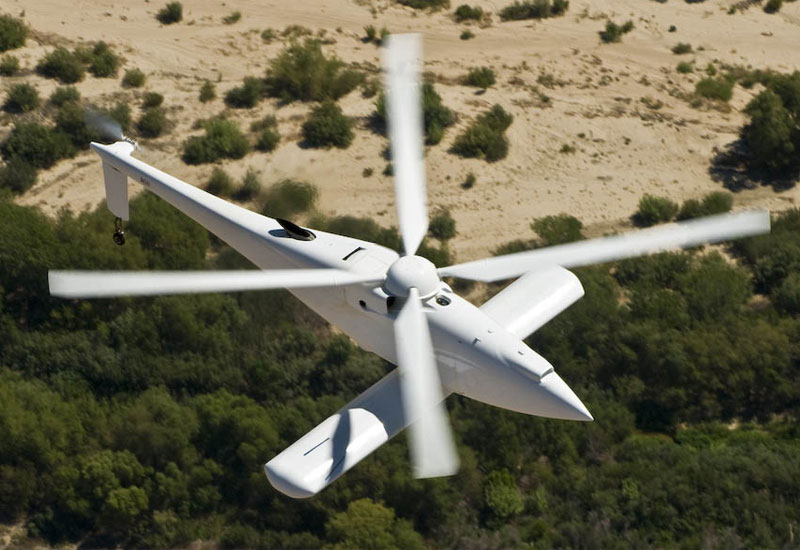
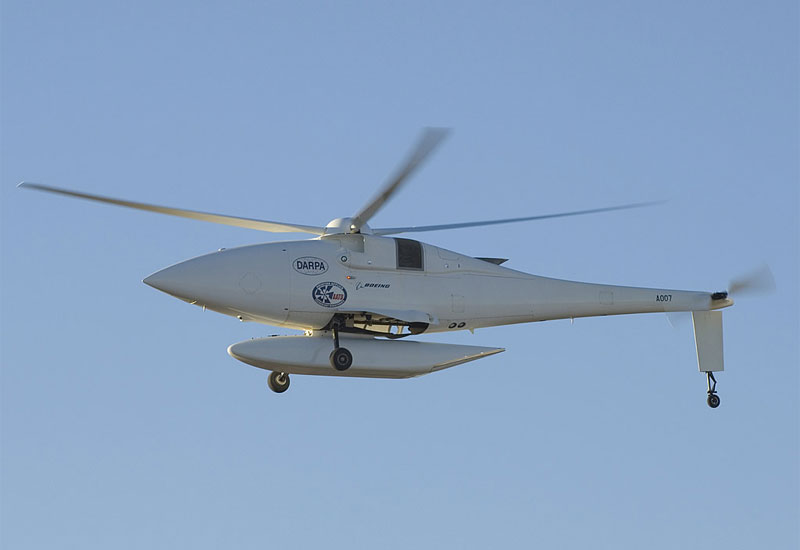
The A160 Hummingbird is a rotary-winged unmanned aerial vehicle that supplies the benefits of conventional UAV systems with that of modern battlefield helicopters. The Hummingbird projects a smaller target, enhanced speed, improved engine efficiency and provides capabilities beyond that of current-generation, full-sized rotary-wing systems. Additionally, as a UAV system, the Hummingbird keeps her flight crew safely away from combat and can provide pinpoint delivery of various payloads to forces in need along a front. Beyond her cargo-carrying capabilities, the Hummingbird promotes versatility and can tackle sorties involving intelligence gathering, reconnaissance and surveillance of the enemy or battlefield (in real-time), act as a mobile aerial communications relay for ground forces and provide target acquisition as needed. It is said that the Hummingbird also maintains a largely autonomous presence on the battlefield, negating much of the human interaction inherent in other UAVs, programmed to make "decisions" during its flight in finding the best avenue for completing a given objective.

The A160's origins lay in Frontier Systems, Incorporated development of their Maverick UAV, a converted form of their Robinson R22 two-seat, manned civilian helicopter product and forerunner to the A160 UAV. The Maverick achieved its first unmanned flight in 1998, just one year after the program had officially started. Internal systems developed for the Maverick UAV were later utilized in the upcoming A160. The Maverick was then acquired by the American military with at least four having served (or possibly still serving) with the US Navy in an unknown capacity.

First flight of the A160 was recorded in January of 2002 and early examples were fitted with an automobile-type, gasoline-fueled engine of 4-cylinder and 6-cylinder breeds tied to a three-bladed rotor assembly. In 2003, the Defense Advanced Research Projects Agency (DARPA) awarded Frontier Systems a contract worth $75 million dollars to produce and test up to four A160 prototypes. However, Boeing absorbed Frontier Systems in 2004 and, in effect, added the Hummingbird to their burgeoning UAV product line. The Hummingbird served, for a time, under the Boeing Phantom Works banner and, later, fell under Boeing's Advanced Systems, a component of Boeing's Integrated Defense Systems.

The revised and improved A160T ("T" to indicate its new turbine powerplant) began flight testing in June of 2007 and, in 2008, she set an endurance world record for a UAV in this weight class, amassing 18.7 total hours of flight time. On September 27th, 2007, one of the A160T prototypes was lost in a crash when a sensor data ceased responding with the flight computer. In March of 2010, the Hummingbird completed an evaluation for the US Marines of her cargo-carrying capabilities when delivering some 2,500lbs in two 150-nautical mile sorties between a pair of simulated Forward Operating Bases (FOB). What made this test wholly unique was that the Hummingbird operated through its preprogrammed mission settings and was more or less completely autonomous. On July 28th, 2010, another A160T prototype crashed after losing control. In August of 2010, a pair of Hummingbirds, fitted with the new "Forrester" radar system, was flight tested in Belize. The radar, also currently development, was being tested for its ability to scan through dense foliage. However, these flight tests resulted in yet another crash of an A160T and thusly ending the tropical evaluation prematurely.

Despite the setbacks, production is reported to have already begun at Boeing's Mesa, Arizona facility as of March 2010. Its formal US military designation will be "YMQ-18A" and the powerplant will be a Pratt & Whitney PW207D turboshaft engine.

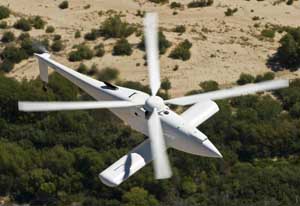
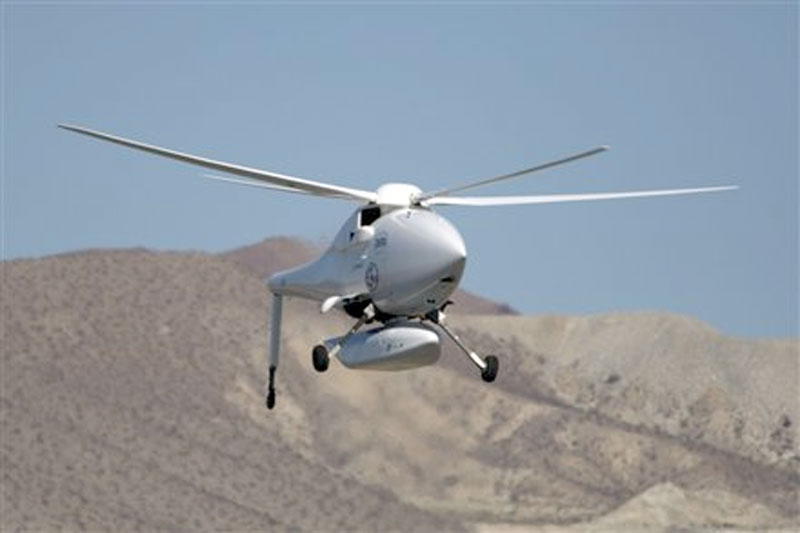
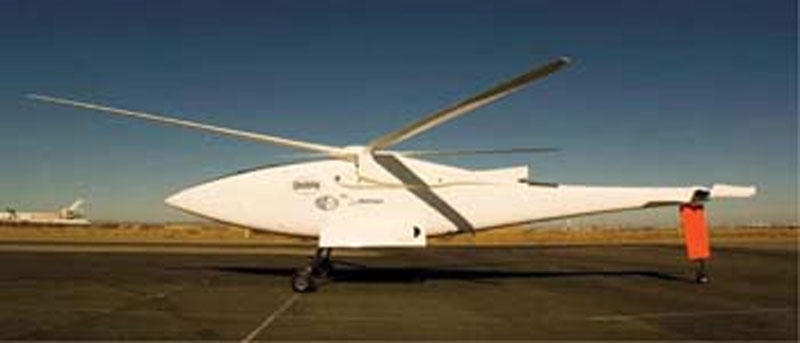
Externally, the Hummingbird fields the same appearance as a conventional manned helicopter thanks to its largely unchanged shape from her Robinson R22 helicopter/Maverick UAV origins. The fuselage is smooth, tapered sharply at the front to form a nose cone and elegantly streamlined aft to form the bulk of the fuselage and empennage tail structure. The four-bladed main rotor sits close to the body atop the fuselage and just slightly ahead center. The undercarriage is made up of two retractable main landing gear legs (retracting rearwards) under amidships with a non-retracting tail wheel at the rear. The powerplant and gearbox are centered within the fuselage with the former aspirated by a pair of side-mounted intakes. The two-bladed tail rotor is set at the aft-most position on the aircraft, facing port side. A vertical tail fin is positioned under the empennage structure and holds the tail wheel. Payloads can be carried directly under the fuselage between the main landing gear legs. The Hummingbird sports a structural length of 35 feet with the main rotor showcasing a 36 foot diameter. Her maximum take-off weight is listed at 6,500lbs. Maximum cruise ceiling is expected to be 30,000 feet though, in its current configuration, the UAV's engine is rated at 20,000 feet. Maximum cruise speed is 189 miles per hour with a 2,589 mile range. Hover altitude is reported to be 20,000 feet.

Boeing claims that their Hummingbird can outperform most any capability inherent in modern helicopters found over the battlefield today. The UAV surpasses both the service ceiling (by some 10,000 feet) and loiter times (24 hours +) of that as showcased by contemporary rotary wing systems. Attention has also been given to the noise levels produced by the Hummingbird so that it promotes less of an audible presence than that of her larger conventional sisters. One of the unique facets of the Hummingbird is its self-adjusting rotor speed technology, allowing the operator to react to changing altitude conditions "on the fly". The rotors can have their revolutions per minute adjusted to supply an optimal rotation (lesser or greater) depending on external conditions, saving fuel in the process and maximizing the Hummingbird's time aloft. Boeing has aptly labeled this feature the "Optimum Speed Rotor" (OSR) system.

Much like a conventional helicopter, the Hummingbird can take off and land without the need of a runway and, unlike other UAVs, does not need a launch catapult or retrieval system. This quality makes her a positive addition to any mobile army fighting along a dynamic front, particularly those groups cut off from traditional battlefield resources. Precise control also assures commanders that the Hummingbird can resupply soldiers in just about any battlefield environment including mountainous regions and urban settings. The Hummingbird has also generated interest for ship-borne use on navy vessels in need of an active, high-altitude, long endurance "eye in the sky".

As of this writing, the Hummingbird is still undergoing active development near Victorville, California. The United States Army (US Army Aviation Applied Technology Directorate), US Navy (Naval Air Systems Command), US Special Forces, the US Department of Homeland Security and several foreign entities have shown an interest in Boeing's new and revolutionary rotary-wing UAV system.

In December of 2010, the US DoD (Naval Air Systems Command) formally announced a $30 million contract ($29,935,037) to Frontier Systems, Incorporated for the procurement of two Hummingbirds to support ongoing American military actions in Afghanistan. Deliveries are expected sometime after August of 2011.

In March of 2011, the US DoD (Army) formally announced a $14 million contract ($13,999,000) to Frontier Systems, Incorporated for the procurement of two upgrade packages concerning the YMQ-18A prototypes. This will bring the two units up to a "Block II" configuration.
Text ©2003-2013 www.MilitaryFactory.com • All Rights Reserved • No Reproduction Permitted
MilitaryFactory.com does NOT sell equipment/weaponry. Material presented throughout this website is for historical and entertainment value and should not to be construed as usable for hardware restoration, maintenance or general operation. Please consult manufacturers for such information. Our disclaimer. Email corrections / Comments to MilitaryFactory at Gmail dot com.
Picture of Boeing MQ-18 Hummingbird (A160)
Pic of the Boeing MQ-18 Hummingbird (A160)
Image of the Boeing MQ-18 Hummingbird (A160)
View All Images (4)

Specifications for the
Boeing MQ-18 Hummingbird (A160)
Unmanned Aerial Vehicle Helicopter


Country of Origin: United States
Manufacturer: Frontier Systems, Incorporated / Boeing Phantom Works / Boeing Integrated Defense Systems - Boeing Advanced Systems - USA
Initial Year of Service: 2012
Production: 2


Focus Model: Boeing MQ-18 Hummingbird (A160)
Crew: 0


Length: 35.10ft (10.7m)
Width: 36.09ft (11.00m)
Height: 0.00ft (0.00m)
Weight (Empty): 2,500lbs (1,134kg)
Weight (MTOW): 6,499lbs (2,948kg)


Powerplant: 1 x Pratt & Whitney PW207D turboshaft engine.


Maximum Speed: 160mph (258kmh; 139kts)
Maximum Range: 1,609miles (2,589km)
Service Ceiling: 26,247ft (8,000m; 5.0miles)
Rate-of-Climb: 0 feet per minute (0m/min)


Hardpoints: 0
Armament Suite:
None. Cargo or equipment pod can be fitted underfuselage.


Variants:
A160 - Base Series Designation; gasoline-fueled 4- or 6-cylinder automobile engine.


A160T - Fitted with turbine engine.

YMQ-18A - US Military Prototype Designation; fitted with Pratt & Whitney PW207D turboshaft engine.

MQ-18A - Expected Formal Military Designation


Operators: United States

ALL AIRCRAFT CATEGORIES

BY DECADE:


1900 to 1909
1910 to 1919
1920 to 1929
1930 to 1939
1940 to 1949
1950 to 1959
1960 to 1969
1970 to 1979
1980 to 1989
1990 to 1999
2000 to 2009
2010 to 2019
2020 to 2029
VIEW ALL
Compare Aircraft


BY TYPE:


Anti-Submarine Warfare (ASW)
Attack Helicopters
Bomber Aircraft
Medium Bombers
Heavy Bombers
Close-Air Support (CAS)
Commercial Aircraft
Dive Bombers
Electronic Warfare Aircraft (EWA)
Experimental / X-Planes
Fighter Aircraft
Floatplane Aircraft
Flying Boat Aircraft
Aerial Refueling Tankers
Helicopters (ALL)
Interceptor Aircraft
Multi-Role Aircraft
Navy Carrier Aircraft
Night Fighters
Reconnaissance / Scout
Search & Rescue (SAR)
Scout Helicopters
Special Purpose
Torpedo Bombers
Trainer Aircraft
Transport Aircraft
Transport Helicopters
Unmanned Aerial Vehicles (UAVs)
Unmanned Combat Air Vehicles (UCAVs)


COLLECTIONS:


4th Generation Fighter Aircraft
5th Generation Fighter Aircraft
US X-Planes
Classic US Warbirds
French Military Helicopters
Grumman "Cats"
Howard Hughes Aircraft
Indian Air Force
Israeli Air Force
Libyan Aircraft
Modern Chinese Aircraft
Modern Chinese Fighters
Modern Military Aircraft
Modern North Korean Aircraft
Modern Trainer Aircraft
Modern US Aircraft
Mikoyan Aircraft
Sukhoi Aircraft
Syrian Aircraft
Top 10 Fighter Aircraft of All Time


AIRCRAFT BY CONFLICT:


Arab-Israeli War (1948)
Cuban Missile Crisis (1959-1962)
Falklands War (1982)
Indo-Pak War (1965, 1971)
Iran-Iraq War (1980-1988)
Lebanon War (1982)
Operation Allied Force (1999)
Operation Desert Storm (1991)
Six Day War (1967)
Spanish Civil War (1936)
Soviet-Afghan War (1979-1989)
Yom Kippur War (1973)


MISCELLANEOUS:


Aircraft Cockpits
Aircraft Manufacturers List
Aircraft Timeline

WORLD WAR 2:


1939 Aircraft
1940 Aircraft
1941 Aircraft
1942 Aircraft
1943 Aircraft
1944 Aircraft
1945 Aircraft
1946 Aircraft
Australian Aircraft
Battle of Britain Aircraft
Bombers
Four-Engine Bombers
British Aircraft
British Bombers
British Transports
Dive Bombers
Canadian Aircraft
Fighters
Chinese Aircraft
French Aircraft
German Aircraft
German Fighters
German Flying Boats
German Jets
Secret Weapons of the Luftwaffe
Italian Aircraft
Imperial Japanese Aircraft
Imperial Japanese Fighters
Mitsubishi Bombers
Navy Aircraft
Pearl Harbor
Polish Aircraft
Romanian Aircraft
US Aircraft
US Bombers
US Navy Aircraft
Soviet Aircraft
Torpedo Bombers
Trainer Aircraft
Transport Aircraft
Tuskegee Airmen Aircraft
W.A.S.P. Aircraft
WW2 Aircraft Ranked by Speed
VIEW ALL


WORLD WAR 1:


1914 Aircraft
1915 Aircraft
1916 Aircraft
1917 Aircraft
1918 Aircraft
Aircraft Timeline
Austro-Hungarian Aircraft
Bomber Aircraft
British Aircraft
Fighters
Flying Boats
French Aircraft
Imperial German Aircraft
Italian Aircraft
Scout Aircraft
Russian Empire Aircraft
US Aircraft
WW1 Aircraft Ranked by Speed
VIEW ALL


KOREAN WAR:


Australian Aircraft
Korean War Aces
Korean War Jets
North Korean Aircraft
US Military Aircraft
VIEW ALL


VIETNAM WAR:


Helicopters
North Vietnam Air Force
US Airpower
VIEW ALL


COLD WAR:


1950s French Aircraft
British V-Bombers
Cold War Bombers
Soviet Aircraft
Soviet Bombers
Soviet Interceptors
Soviet Helicopters
Strategic Air Command
US Aircraft
US Bombers
US Interceptors
VIEW ALL

Site Disclaimer | Privacy Policy | Site Map | MF Origins


©2013 www.MilitaryFactory.com • Content ©2003-2013 MilitaryFactory.com • All Rights Reserved • Site Contact Email: militaryfactory at gmail dot com. The "Military Factory" name and MilitaryFactory.com logo are registered ® trademarks and protected by all applicable domestic and international intellectual property laws.


Top MF Stuff: 2013 Military Pay Scale | Military Ranks | WW2 Weapons | Sniper Rifles | Kts to Mph | WW1 Aircraft | Automatic Rifles | Aircraft Cockpits | Vietnam War Weapons | Main Battle Tanks | Submachine Guns | Shotguns | French Military Victories


Most photographic images appearing on this site are courtesy of the United States Department of Defense and are approved for public use. Other images acquired through the public domain. Digital art work courtesy of Dan Alex. Business Consulting by Kyle Williams. Material presented throughout this website is for historical and entertainment value and should not to be construed as usable for hardware restoration, maintenance or general operation. Please consult manufacturers for such information.


eXTReMe Tracker