Military Factory
Military Pay Chart
Global Firepower
Military Industrial Complex
Second World War
Home
Military Pay Scale
Military Ranks
Small Arms
Aircraft
Land Systems
Navy
Education
Military Factory Facebook Logo
flag of Soviet Union

Ilyushin IL-38 (May) Anti-Submarine Maritime Patrol Aircraft (1968)

Authored By Staff Writer | Last Updated: 9/20/2010

The Ilyushin IL-38 May has served with the Soviet-Russian Navy since its inception in 1967.

Find a School Near You
Follow Military Factory on Facebook:
Trending on Military Factory:
Recent Articles:
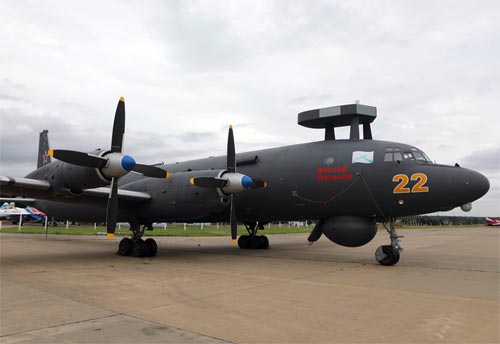
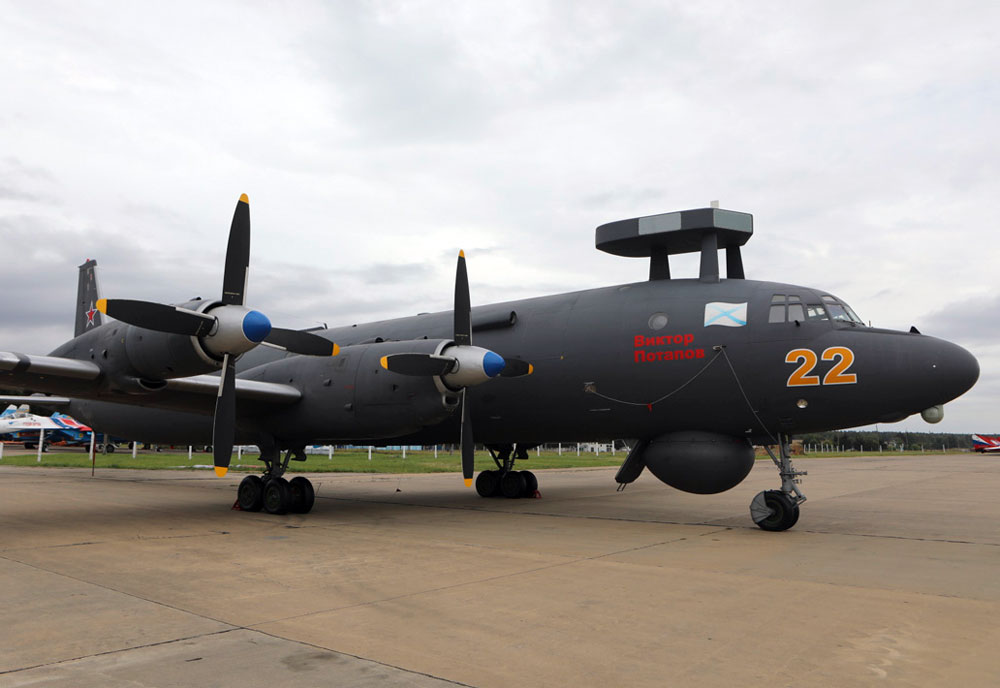
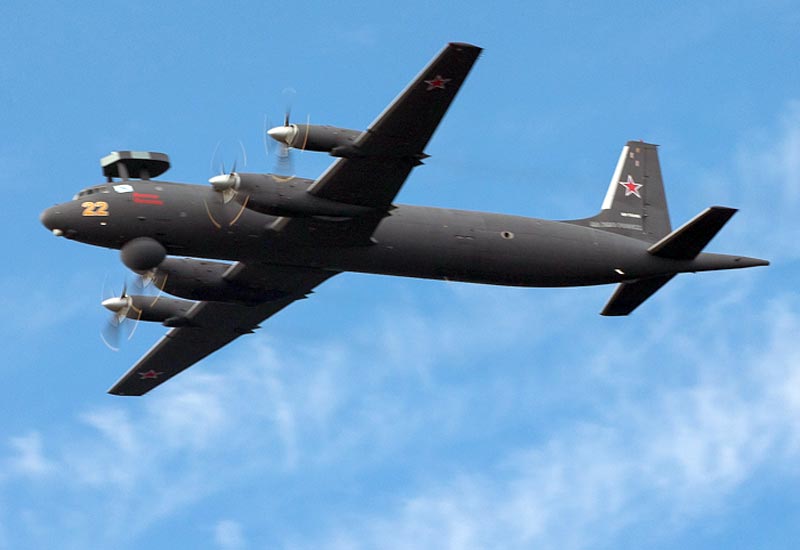
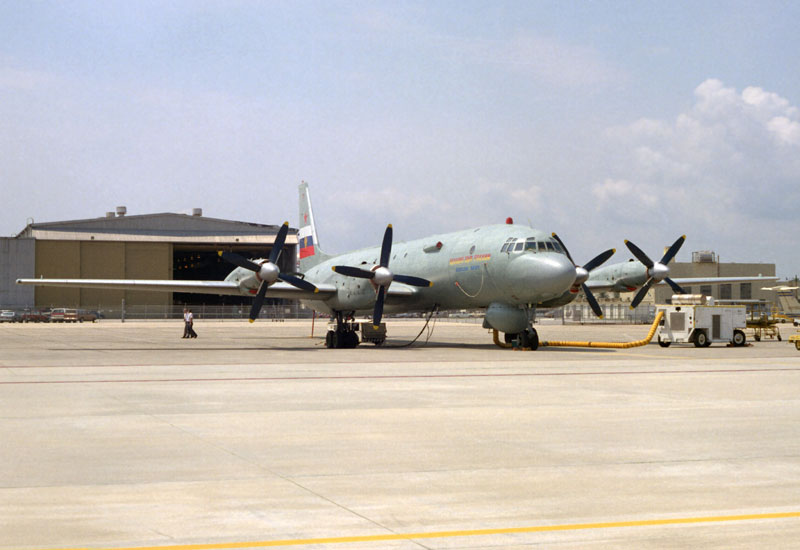
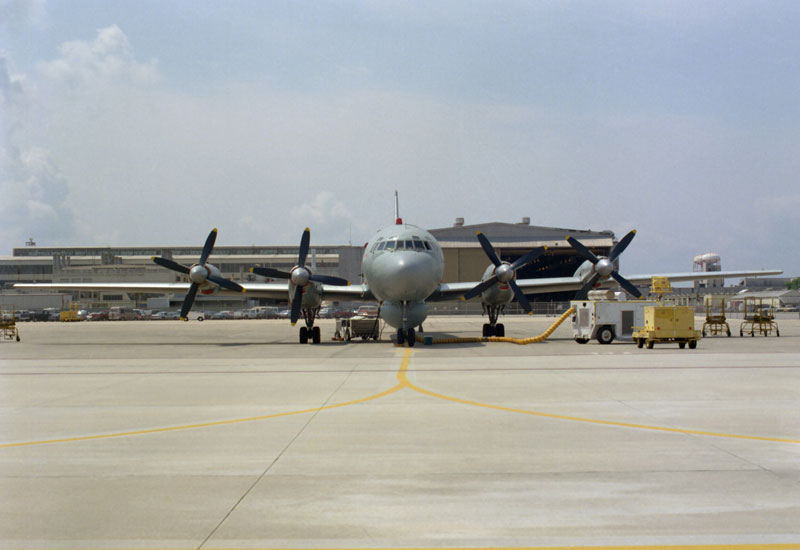
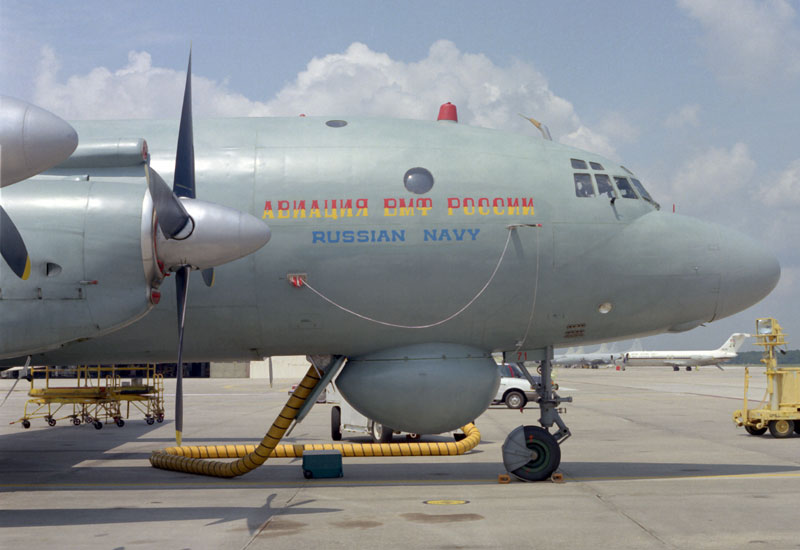
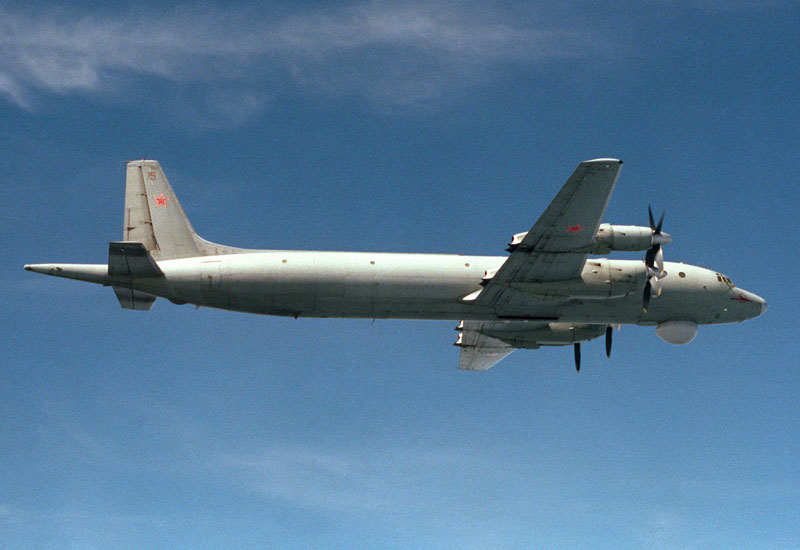
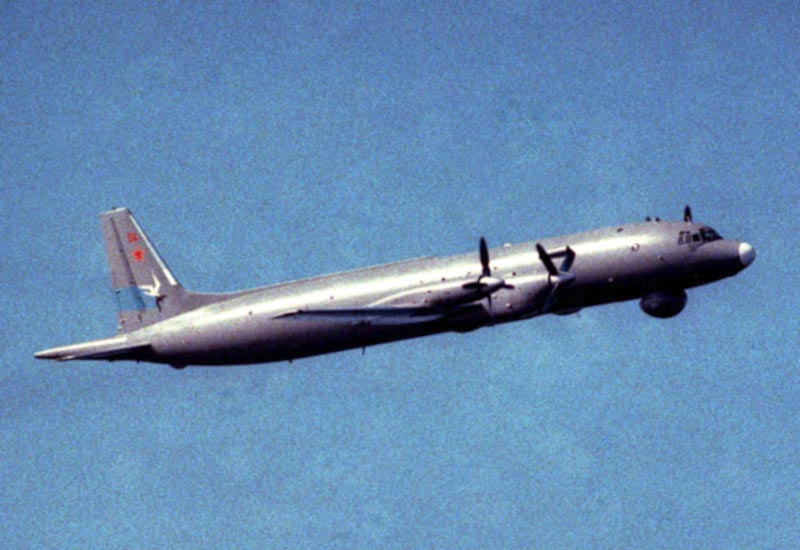
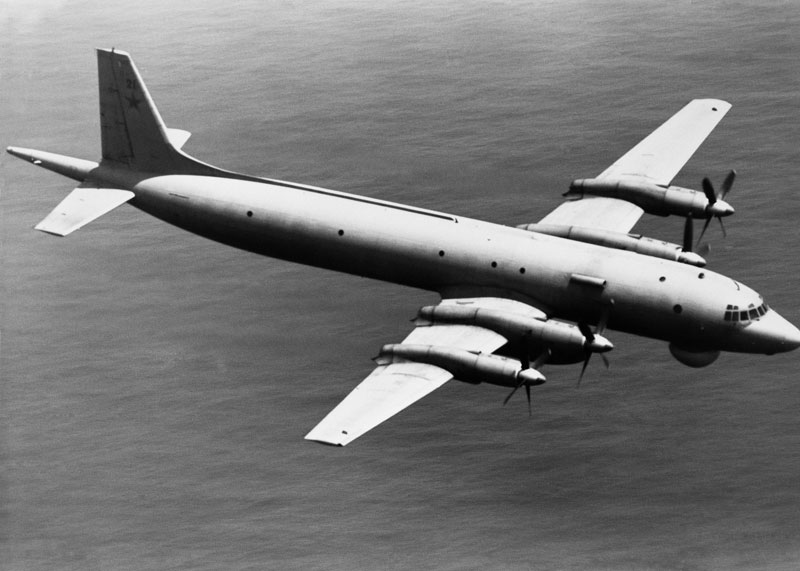
The Ilyushin IL-38 (NATO codename of "May") is a maritime patrol and anti-submarine platform utilized solely by the navies of Russia and India. The IL-38 is a militarized development of the IL-18, a civil passenger airliner produced by the same Soviet state bureau. Besides her similar outward appearance to the IL-18, the IL-38 shares only a few key features with the original civil airliner - the most notable of these being the turboprop engines. Additionally, the IL-38 fields a revised nose assembly making her some 13 feet, 1.5 inches longer than the IL-18. The wings have also been relocated forward along the fuselage to compensate for the added mission equipment weight and adjusted center of gravity and the cabin windows prevalent in the civilian model have been reduced in number for the IL-38. As such, the IL-38 is generally regarded as a "new-build" aircraft through-and-through and implementation of specialized onboard systems justify its dedicated role.

A prototype version was first flown on September 28th, 1961. By 1967, the aircraft had entered production under the designation of "IL-38". The aircraft was a regular performer within the inventory of the then-Soviet Naval Aviation service until the fall of the Soviet Union in the late 1980s and early 1990s. Since then, the IL-38 has operated under the banner of the resurging Russian Naval Aviation service. Since production of the IL-38 completed in 1972, its primary roles have been gradually replaced by the more powerful and long-range four-engine Tupolev Tu-142 ("Bear"). Despite the appearance of the Bear series, the IL-38 still maintains operational value to the Russian Navy even today. Some 57 IL-38 examples are believed to have been produced for the Soviet/Russian Navy with a further 5 delivered to India.

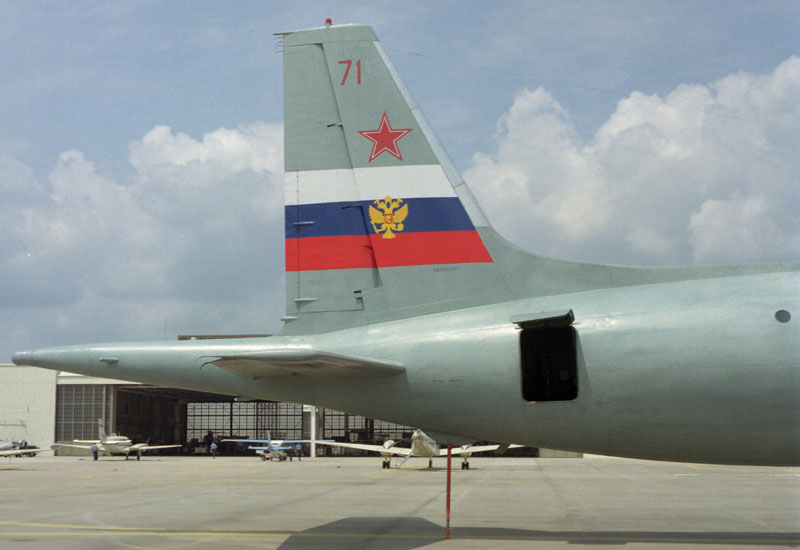
The aircraft sported a smooth cylindrical fuselage and definite streamlined shape. The cockpit was held well-forward in the design, fitted just aft of the nose cone. Under the nose cone assembly lay the weather radar. Located just aft and below the cockpit flight deck was the Berkut (meaning "Golden Eagle" and known as "Wet Eye" to NATO) search radar fitted into a noticeable fuselage blister. Wings were low-mounted monoplanes set ahead of amidships. The engines - four in number - sat within slender streamlined nacelles jutting out from each wing leading edge (two engines to a wing). The empennage was more or less conventional with its tall vertical tail fin. Horizontal stabilizers were fitted slightly aft of the tail fin. Between the horizontal stabilizers and under the tail fin lay a boom housing the Magnetic Anomaly Detector (MAD). Mission ordnance was held within two internal bomb bays - one arranged forward of the wing assemblies to house sonobouys and the other aft to house the weapons proper. A rear starboard side cabin door was the method of entry and exit for the crew. The undercarriage was a conventional tricycle arrangement featuring a pair of four-wheeled main landing gear legs and a two-wheeled nose landing gear leg. The standard operating crew consisted of nine or ten personnel to include the two pilots, a flight engineer, sensor operators, MAD operator, tactical coordinator and applicable mission observers.

Power for the IL-38 was delivered through two sets of ZMKB Progress (Ivchenko) AI-20M turboprop engines, each delivering upwards of 4,250 horsepower and fitting four blade propellers. This supplied the IL-38 with a maximum speed between 380 and 400 miles per hour and a range between 4,400 and 6,000 miles for an operational endurance nearing 12 hours of consistent flight time. Service ceiling was listed at approximately 32,800 feet with a rate-of-climb equaling 1,050 feet per minute. Empty weight was in the vicinity of 74,000lbs with a maximum take-off weight near 140,000lbs. Up to 20,000lbs of external and internal stores can be carried aloft, this in the form of depth charges (nuclear and conventional), mines, conventional drop bombs and air-launched torpedoes. This variety of weaponry - coupled with the onboard sensor, tracking and targeting systems- allow the IL-38 to attack various forms of enemy surface and submarine vessels.

Despite the wide-spanning reach of the communism sphere of influence throughout the Cold War, only India became a foreign operator of the IL-38 and received at least five examples between 1975 and 1983 to be stationed from Goa-Dablomin. As in the Soviet/Russian Navy, the IL-38 served the Indian Navy and differed only in the implementation of the Sea Eagle anti-ship missile system. The Indian IL-38s were at one point flown back to Russia for modernization and upgrading of key systems and are since returning to Indian service (as of this writing) under the new designation of IL-38 SD to indicate the applied changes.

Beyond her inherent anti-submarine and maritime patrol roles, the IL-38 airframe has proven suitable for a few notable conversions - namely an ELINT (ELectronic INTelligence) model, airborne command post, VIP transport and a dedicated general transport variant.

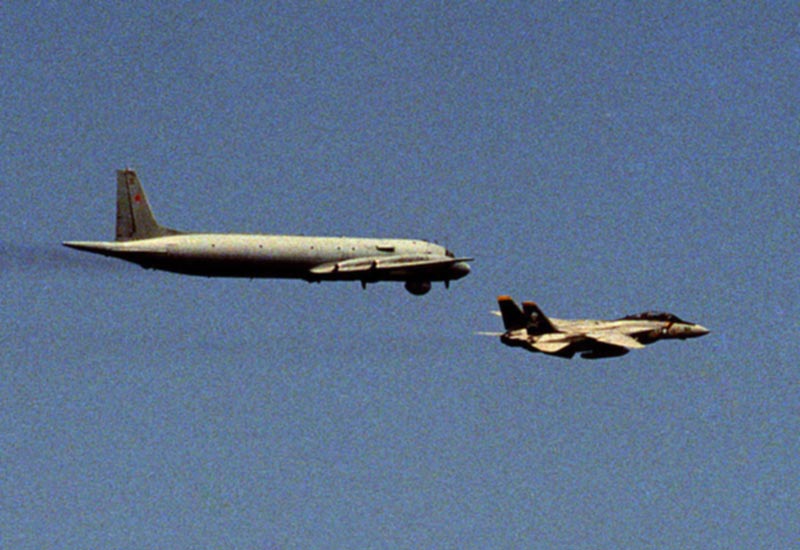
On September 10th, 2010, it was reported in the American media that an IL-38 flew several close routes near the guided-missile frigate USS Taylor in the Barents Sea, coming as close as 50 yards from the vessel's side. The incident was followed the next day by a visit from a Helix anti-submarine helicopter. Such confrontations have always been common between American naval forces and Russian aircraft since the days of the Cold War. These incidents are usually a show of force or exercises completed by either party and rarely lead to any direct military confrontations.
Text ©2003-2013 www.MilitaryFactory.com • All Rights Reserved • No Reproduction Permitted
MilitaryFactory.com does NOT sell equipment/weaponry. Material presented throughout this website is for historical and entertainment value and should not to be construed as usable for hardware restoration, maintenance or general operation. Please consult manufacturers for such information. Our disclaimer. Email corrections / Comments to MilitaryFactory at Gmail dot com.
Picture of Ilyushin IL-38 (May)
Pic of the Ilyushin IL-38 (May)
Image of the Ilyushin IL-38 (May)
View All Images (16)

Specifications for the
Ilyushin IL-38 (May)
Anti-Submarine Maritime Patrol Aircraft


Country of Origin: Soviet Union
Manufacturer: Ilyushin - Soviet Union
Initial Year of Service: 1968
Production: 62


Focus Model: Ilyushin IL-38 (May)
Crew: 9 or 10


Length: 129.92ft (39.6m)
Width: 122.77ft (37.42m)
Height: 33.33ft (10.16m)
Weight (Empty): 74,296lbs (33,700kg)
Weight (MTOW): 139,994lbs (63,500kg)


Powerplant: 4 x ZMKB Progress (Ivchenko) AI-20M turboprop engines delivering 4,250 horsepower each.


Maximum Speed: 404mph (650kmh; 351kts)
Maximum Range: 5,903miles (9,500km)
Service Ceiling: 32,808ft (10,000m; 6.2miles)
Rate-of-Climb: 1,050 feet per minute (320m/min)


Hardpoints: 2
Armament Suite:
Up to 20,000lbs of internal and external stores including conventional drop bombs, mines, depth charges (nuclear and conventional), anti-ship missiles and torpedoes. Ordnance held within two internal bomb bays and across two optional external hardpoints.


Variants:
IL-38 - Base Series Designation


IL-38 SD - Upgraded Indian IL-38 export models; fitted with improved radar functionality, "Sea Dragon" avionics suiteForward-Looking Infrared (FLIR) and ELINT system.


Operators: India; Russia; Soviet Union

ALL AIRCRAFT CATEGORIES

BY DECADE:


1900 to 1909
1910 to 1919
1920 to 1929
1930 to 1939
1940 to 1949
1950 to 1959
1960 to 1969
1970 to 1979
1980 to 1989
1990 to 1999
2000 to 2009
2010 to 2019
2020 to 2029
VIEW ALL
Compare Aircraft


BY TYPE:


Anti-Submarine Warfare (ASW)
Attack Helicopters
Bomber Aircraft
Medium Bombers
Heavy Bombers
Close-Air Support (CAS)
Commercial Aircraft
Dive Bombers
Electronic Warfare Aircraft (EWA)
Experimental / X-Planes
Fighter Aircraft
Floatplane Aircraft
Flying Boat Aircraft
Aerial Refueling Tankers
Helicopters (ALL)
Interceptor Aircraft
Multi-Role Aircraft
Navy Carrier Aircraft
Night Fighters
Reconnaissance / Scout
Search & Rescue (SAR)
Scout Helicopters
Special Purpose
Torpedo Bombers
Trainer Aircraft
Transport Aircraft
Transport Helicopters
Unmanned Aerial Vehicles (UAVs)
Unmanned Combat Air Vehicles (UCAVs)


COLLECTIONS:


4th Generation Fighter Aircraft
5th Generation Fighter Aircraft
US X-Planes
Classic US Warbirds
French Military Helicopters
Grumman "Cats"
Howard Hughes Aircraft
Indian Air Force
Israeli Air Force
Libyan Aircraft
Modern Chinese Aircraft
Modern Chinese Fighters
Modern Military Aircraft
Modern North Korean Aircraft
Modern Trainer Aircraft
Modern US Aircraft
Mikoyan Aircraft
Sukhoi Aircraft
Syrian Aircraft
Top 10 Fighter Aircraft of All Time


AIRCRAFT BY CONFLICT:


Arab-Israeli War (1948)
Cuban Missile Crisis (1959-1962)
Falklands War (1982)
Indo-Pak War (1965, 1971)
Iran-Iraq War (1980-1988)
Lebanon War (1982)
Operation Allied Force (1999)
Operation Desert Storm (1991)
Six Day War (1967)
Spanish Civil War (1936)
Soviet-Afghan War (1979-1989)
Yom Kippur War (1973)


MISCELLANEOUS:


Aircraft Cockpits
Aircraft Manufacturers List
Aircraft Timeline

WORLD WAR 2:


1939 Aircraft
1940 Aircraft
1941 Aircraft
1942 Aircraft
1943 Aircraft
1944 Aircraft
1945 Aircraft
1946 Aircraft
Australian Aircraft
Battle of Britain Aircraft
Bombers
Four-Engine Bombers
British Aircraft
British Bombers
British Transports
Dive Bombers
Canadian Aircraft
Fighters
Chinese Aircraft
French Aircraft
German Aircraft
German Fighters
German Flying Boats
German Jets
Secret Weapons of the Luftwaffe
Italian Aircraft
Imperial Japanese Aircraft
Imperial Japanese Fighters
Mitsubishi Bombers
Navy Aircraft
Pearl Harbor
Polish Aircraft
Romanian Aircraft
US Aircraft
US Bombers
US Navy Aircraft
Soviet Aircraft
Torpedo Bombers
Transport Aircraft
Tuskegee Airmen Aircraft
W.A.S.P. Aircraft
WW2 Aircraft Ranked by Speed
VIEW ALL


WORLD WAR 1:


1914 Aircraft
1915 Aircraft
1916 Aircraft
1917 Aircraft
1918 Aircraft
Aircraft Timeline
Austro-Hungarian Aircraft
Bomber Aircraft
British Aircraft
Fighters
Flying Boats
French Aircraft
Imperial German Aircraft
Italian Aircraft
Scout Aircraft
Russian Empire Aircraft
US Aircraft
WW1 Aircraft Ranked by Speed
VIEW ALL


KOREAN WAR:


Australian Aircraft
Korean War Aces
Korean War Jets
North Korean Aircraft
US Military Aircraft
VIEW ALL


VIETNAM WAR:


Helicopters
North Vietnam Air Force
US Airpower
VIEW ALL


COLD WAR:


1950s French Aircraft
British V-Bombers
Cold War Bombers
Soviet Aircraft
Soviet Bombers
Soviet Interceptors
Soviet Helicopters
Strategic Air Command
US Aircraft
US Bombers
US Interceptors
VIEW ALL

Site Disclaimer | Privacy Policy | Site Map | MF Origins


©2013 www.MilitaryFactory.com • Content ©2003-2013 MilitaryFactory.com • All Rights Reserved • Site Contact Email: militaryfactory at gmail dot com. The "Military Factory" name and MilitaryFactory.com logo are registered ® trademarks and protected by all applicable domestic and international intellectual property laws.


Top MF Stuff: 2013 Military Pay Scale | Military Ranks | WW2 Weapons | Sniper Rifles | Kts to Mph | WW1 Aircraft | Automatic Rifles | Aircraft Cockpits | Vietnam War Weapons | Main Battle Tanks | Submachine Guns | Shotguns | French Military Victories


Most photographic images appearing on this site are courtesy of the United States Department of Defense and are approved for public use. Other images acquired through the public domain. Digital art work courtesy of Dan Alex. Business Consulting by Kyle Williams. Material presented throughout this website is for historical and entertainment value and should not to be construed as usable for hardware restoration, maintenance or general operation. Please consult manufacturers for such information.


eXTReMe Tracker