Military Factory
Military Pay Chart
Global Firepower
Military Industrial Complex
Second World War
Home
Military Pay Scale
Military Ranks
Small Arms
Aircraft
Land Systems
Navy
Education
Military Factory Facebook Logo
flag of United States

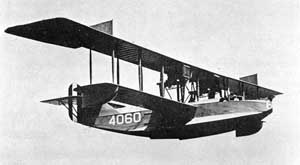
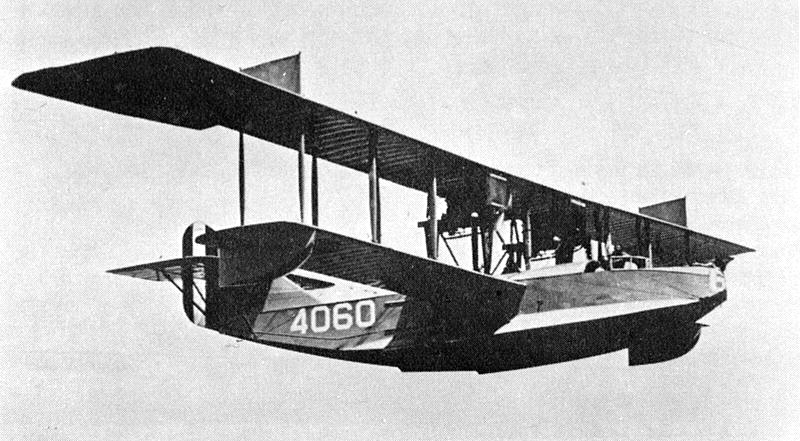
Curtiss H-16 Seaplane / Flying Boat (1917)

Authored By Staff Writer | Last Updated: 7/15/2012

The H-16 Flying Boat was the final evolution of the Curtiss Model H design.

Find a School Near You
Follow Military Factory on Facebook:
Trending on Military Factory:
Recent Articles:
In 1911, the Curtiss Aeroplane and Motor Company unveiled their Model D, a biplane aircraft powered by a single Curtiss E-4 engine of 40 horsepower (in a "pusher" configuration) and featuring a tricycle undercarriage. The type was produced in some number and went on to see use by the United States Army Signal Corps and the United States Navy. Work soon began on an improved form and this produced the Model E of enlarged dimensions and these went on to serve the United States Navy, appearing in three distinct model forms - E-4, E-8 and E-8-75. This particular type did much to further the development of seaplanes concerning the US Navy for lessons learned there played a major role in the upcoming designs leading up to World War 1.

In response to the Daily Mail's 1913 contest for an aircraft that could cross the Atlantic Ocean (for a 10,000 pound prize), Curtiss evolved its Model E line to a much more larger and modern form. The larger dimensions were necessitated by the need for more internal fuel volume required of long distances. Two prototypes were completed and designated as "Model H-2". First flight occurred in June 1914 and the aircraft made ready for its transatlantic flight by being shipped to England. British test pilot John Cyril Porte was selected to be its pilot.

Design-wise, the H-2 was a very competent aircraft design featuring a boat-like hull perfect for sea operation (landing and taking-off). The wings themselves were equal-span biplane assemblies with dual bays. Between each wing plane were the powerplants (in a "puller" configuration), each rotating two-bladed propellers.

Everything changes on June 28th, 1914 when Yugoslav nationalist Gavrilo Princip assassinated Archduke Franz Ferdinand of Austria-Hungary, bringing to a head the built up tensions that had existed between European powers for decades prior. As such, alliances and secret treaties came into play, pitting nation against nation to finalize the participants of World War 1. With war in Europe now a full-fledged reality, the Daily Mail competition was obviously cancelled and the H-2 never got to prove its worth on a global stage.

Fortune in war soon found the Curtiss product, however, for Porte - a serviceman of the British Royal Navy - pushed for the Royal Navy's adoption of the Curtiss seaplane design. The Royal Navy, sensing the need for such aircraft, purchased the two existing airframes and ordered a further 12 examples, these later forms to be designated as "Model H-4". Within time, the British engineered their own Curtiss-inspired version of same seaplane aircraft to become the Felixstowe F.1 line. 62 total Model H-4 aircraft were ultimately produced.

As the war progressed, Curtiss took to furthering its Model H-4 design into the "Model H-8" which was even larger dimensionally than the preceding marks. Both the United States Navy and British Royal Navy took note of the type and acquired it in number as the "Model H-12". The numerically superior H-12 mark was completed with 2 x Curtiss V-X-X engines of 160 horsepower each. The Royal Navy offered up a slightly different version powered by 2 x Rolls-Royce Eagle engines of approximately 275 horsepower each. American versions fitted with Liberty engines were known as "Model H-12L" (note the "L"). The H-12 formed the basis of the British Felixstowe F.2 series of which 175 were produced.

In 1917, the Curtiss H-series seaplane family reached its design pinnacle with the introduction of the "Model H-16". The wings were lengthened for better control and the hull was strengthened while overall dimensions were once again enlarged. The crew was increased to four personnel. Power was derived from Liberty (or Rolls-Royce Eagle) V12 engines of 360 horsepower. 334 of this mark were produced with manufacture coming under both the Curtiss Aeroplane and Naval Aircraft Factory brand labels. Two "one-off" designs then appeared, the "Model H-16-1" with pusher engine configuration and the "Model H-16-2" with pusher engine configuration and redesigned wings though these never materialized into serious production marks.

The H-16 crew consisted of two pilots and two dedicated machine gunners. The pilots sat in the partially-enclosed cockpit flight deck at the front end of the fuselage. One machine gunner was seated in the forward-most open-air cockpit at the front of the fuselage. The other managed a dorsal gun position amidships aft of the wing assemblies. The wings were high-mounted on the fuselage. The fuselage tapered off at the rear and was capped by a triangular vertical tail fin with applicable horizontal tailplanes. Cabling was apparent throughout the wing surfaces of the design as was common for the time period concerning aircraft. The H-16 maintained the earlier Curtiss boat-like hull which enabled the aircraft to land on water. By now the wingspan of the H-16 required no fewer than four bays with parallel struts. Weaponry included up to 7 x 7.7mm Lewis machine guns on flexible mountings. The H-16 could carry a bomb load of up to 460lbs.

During wartime, aircraft such as the Curtiss H-series certainly displayed their much sought after value. Their seaplane nature allowed them free use of water landings as needed while their inherent designs allowed for long "over-water" endurance. These qualities served well when hunting down enemy surface ships or submarines or in the locating of downed airmen or seamen. Patrols of such types were extremely common and seaplanes were also charged with hunting the slow and plodding Zeppelin airships. As control of waters between England and Europe was critical to Allied success in the war, seaplanes certainly played an important part in the ongoing struggle. Nearly all available Curtiss seaplanes used in World War 1 were operated by the British. American versions were limited to local use in anti-submarine patrolling though some arrived in Europe prior to the Armistice in November of 1918.

The Curtiss H series of seaplanes managed a short operational existence beyond World War 1, to which then they were retired in favor of more modern types. Some 478 total H-series aircraft were ultimately produced.
Text ©2003-2013 www.MilitaryFactory.com • All Rights Reserved • No Reproduction Permitted
MilitaryFactory.com does NOT sell equipment/weaponry. Material presented throughout this website is for historical and entertainment value and should not to be construed as usable for hardware restoration, maintenance or general operation. Please consult manufacturers for such information. Our disclaimer. Email corrections / Comments to MilitaryFactory at Gmail dot com.
Picture of Curtiss H-16
View All Images (1)

Specifications for the
Curtiss H-16
Seaplane / Flying Boat


Country of Origin: United States
Manufacturer: Curtiss Aircraft / Naval Aircraft Factory - USA
Initial Year of Service: 1917
Production: 334


Focus Model: Curtiss H-16
Crew: 4


Length: 46.13ft (14.06m)
Width: 98.36ft (29.98m)
Height: 17.72ft (5.40m)
Weight (Empty): 10,900lbs (4,944kg)
Weight (MTOW): 14,330lbs (6,500kg)


Powerplant: 2 x Liberty 12-cylinder V-type engines developing 400 horsepower each.


Maximum Speed: 95mph (153kmh; 83kts)
Maximum Range: 378miles (608km)
Service Ceiling: 9,951ft (3,033m; 1.9miles)
Rate-of-Climb: 400 feet per minute (122m/min)


Hardpoints: 4
Armament Suite:
5 to 7 x 0.30 caliber Lewis machine guns on flexible mounts.

OPTIONAL:
Up to 460lbs of bombs.


Variants:
H-2 - Initial Prototype Seaplane Models; 2 examples produced.


H-4 - Royal Navy production forms of the H-2; 62 examples produced.

H-8 - Based on H-4; dimensionally larger.

H-12 - Production version of the H-8 for Royal Navy and US Navy use; 2 x Curtiss or Rolls-Royce engines; 104 examples completed.

H-16 - Base Series Designation; based on the H-8; longer wings; dimensionally larger; reinforced hull; Liberty or Rolls-Royce engines; 334 examples completed.

Model 6C - Alternative Designation

Model H-16-1 - One-off prototype; fitted with engines in "pusher" configuration.

Model H-16-2 - One-off prototype; fitted with engines in "pusher" configuration; revised wings.


Operators: United Kingdom; United States

ALL AIRCRAFT CATEGORIES

BY DECADE:


1900 to 1909
1910 to 1919
1920 to 1929
1930 to 1939
1940 to 1949
1950 to 1959
1960 to 1969
1970 to 1979
1980 to 1989
1990 to 1999
2000 to 2009
2010 to 2019
2020 to 2029
VIEW ALL
Compare Aircraft


BY TYPE:


Anti-Submarine Warfare (ASW)
Attack Helicopters
Bomber Aircraft
Medium Bombers
Heavy Bombers
Close-Air Support (CAS)
Commercial Aircraft
Dive Bombers
Electronic Warfare Aircraft (EWA)
Experimental / X-Planes
Fighter Aircraft
Floatplane Aircraft
Flying Boat Aircraft
Aerial Refueling Tankers
Helicopters (ALL)
Interceptor Aircraft
Multi-Role Aircraft
Navy Carrier Aircraft
Night Fighters
Reconnaissance / Scout
Search & Rescue (SAR)
Scout Helicopters
Special Purpose
Torpedo Bombers
Trainer Aircraft
Transport Aircraft
Transport Helicopters
Unmanned Aerial Vehicles (UAVs)
Unmanned Combat Air Vehicles (UCAVs)


COLLECTIONS:


4th Generation Fighter Aircraft
5th Generation Fighter Aircraft
US X-Planes
Classic US Warbirds
French Military Helicopters
Grumman "Cats"
Howard Hughes Aircraft
Indian Air Force
Israeli Air Force
Libyan Aircraft
Modern Chinese Aircraft
Modern Chinese Fighters
Modern Military Aircraft
Modern North Korean Aircraft
Modern Trainer Aircraft
Modern US Aircraft
Mikoyan Aircraft
Sukhoi Aircraft
Syrian Aircraft
Top 10 Fighter Aircraft of All Time


AIRCRAFT BY CONFLICT:


Arab-Israeli War (1948)
Cuban Missile Crisis (1959-1962)
Falklands War (1982)
Indo-Pak War (1965, 1971)
Iran-Iraq War (1980-1988)
Lebanon War (1982)
Operation Allied Force (1999)
Operation Desert Storm (1991)
Six Day War (1967)
Spanish Civil War (1936)
Soviet-Afghan War (1979-1989)
Yom Kippur War (1973)


MISCELLANEOUS:


Aircraft Cockpits
Aircraft Manufacturers List
Aircraft Timeline

WORLD WAR 2:


1939 Aircraft
1940 Aircraft
1941 Aircraft
1942 Aircraft
1943 Aircraft
1944 Aircraft
1945 Aircraft
1946 Aircraft
Australian Aircraft
Battle of Britain Aircraft
Bombers
Four-Engine Bombers
British Aircraft
British Bombers
British Transports
Dive Bombers
Canadian Aircraft
Fighters
Chinese Aircraft
French Aircraft
German Aircraft
German Fighters
German Flying Boats
German Jets
Secret Weapons of the Luftwaffe
Italian Aircraft
Imperial Japanese Aircraft
Imperial Japanese Fighters
Mitsubishi Bombers
Navy Aircraft
Pearl Harbor
Polish Aircraft
Romanian Aircraft
US Aircraft
US Bombers
US Navy Aircraft
Soviet Aircraft
Torpedo Bombers
Transport Aircraft
Tuskegee Airmen Aircraft
W.A.S.P. Aircraft
WW2 Aircraft Ranked by Speed
VIEW ALL


WORLD WAR 1:


1914 Aircraft
1915 Aircraft
1916 Aircraft
1917 Aircraft
1918 Aircraft
Aircraft Timeline
Austro-Hungarian Aircraft
Bomber Aircraft
British Aircraft
Fighters
Flying Boats
French Aircraft
Imperial German Aircraft
Italian Aircraft
Scout Aircraft
Russian Empire Aircraft
US Aircraft
WW1 Aircraft Ranked by Speed
VIEW ALL


KOREAN WAR:


Australian Aircraft
Korean War Aces
Korean War Jets
North Korean Aircraft
US Military Aircraft
VIEW ALL


VIETNAM WAR:


Helicopters
North Vietnam Air Force
US Airpower
VIEW ALL


COLD WAR:


1950s French Aircraft
British V-Bombers
Cold War Bombers
Soviet Aircraft
Soviet Bombers
Soviet Interceptors
Soviet Helicopters
Strategic Air Command
US Aircraft
US Bombers
US Interceptors
VIEW ALL

Site Disclaimer | Privacy Policy | Site Map | MF Origins


©2013 www.MilitaryFactory.com • Content ©2003-2013 MilitaryFactory.com • All Rights Reserved • Site Contact Email: militaryfactory at gmail dot com. The "Military Factory" name and MilitaryFactory.com logo are registered ® trademarks and protected by all applicable domestic and international intellectual property laws.


Top MF Stuff: 2013 Military Pay Scale | Military Ranks | WW2 Weapons | Sniper Rifles | Kts to Mph | WW1 Aircraft | Automatic Rifles | Aircraft Cockpits | Vietnam War Weapons | Main Battle Tanks | Submachine Guns | Shotguns | French Military Victories


Most photographic images appearing on this site are courtesy of the United States Department of Defense and are approved for public use. Other images acquired through the public domain. Digital art work courtesy of Dan Alex. Business Consulting by Kyle Williams. Material presented throughout this website is for historical and entertainment value and should not to be construed as usable for hardware restoration, maintenance or general operation. Please consult manufacturers for such information.


eXTReMe Tracker