Military Factory
Military Pay Chart
Global Firepower
Military Industrial Complex
Second World War
Home
Military Pay Scale
Military Ranks
Small Arms
Aircraft
Land Systems
Navy
Education
Military Factory Facebook Logo
flag of Finland

VL Myrsky (Storm) Fighter / Fighter-Bomber / Reconnaissance (1943)

Authored By Staff Writer | Last Updated: 5/10/2012

The indigenous Finnish VL Myrsky fighter series led a relatively short operational life and low production numbers.

Find a School Near You
Follow Military Factory on Facebook:
Trending on Military Factory:
Recent Articles:
Prior to its war with the Soviets, Finnish authorities were contemplating an indigenous fighter design to stock its fledgling air force. By the middle of 1939, the program had gained some traction but no products were ready by November when the Soviet Union invaded Finland to spark the "Winter War". The conflict resulted in an "interim peace" in March of 1940 though the war no doubt put Finnish authorities on alert, giving further traction to the indigenous fighter design initiative known as the VL Myrsky ("Storm"). The Myrsky was produced through the state-owned Valtion Lentokonetehdas concern (hence the "VL" in the designation) with design work beginning in 1941 under the leadership of Edward Wageluis.

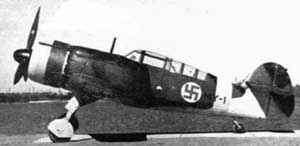
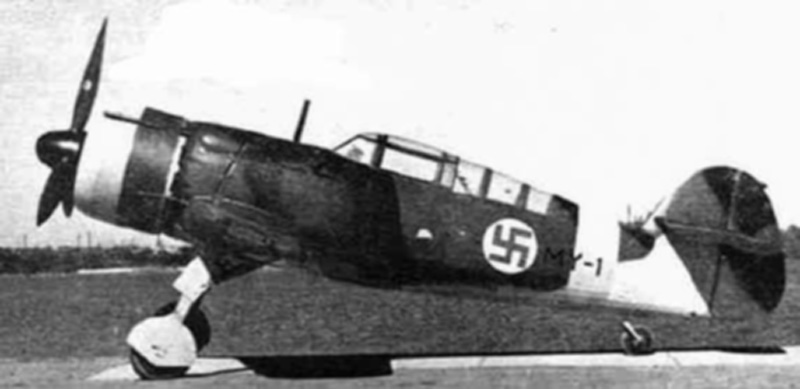
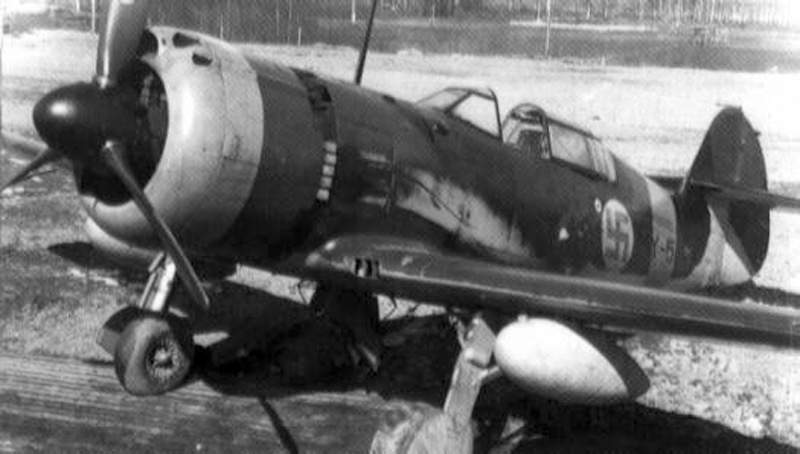
The Myrsky was of conventional design arrangement as piston-powered aircraft of the time go. The type was characterized by its low-monoplane wing assemblies (fitting ahead of center) and its forward-mounted radial piston engine powering a three-bladed propeller. The cockpit was set along the center of the design with good views to either side and rather limiting views forward overlooking the long nose. The empennage was traditional in its arrangement with a short, rounded vertical tailfin and applicable rounded horizontal tailplanes. The undercarriage was retractable and made up two single-wheeled main landing gear legs and a tail wheel. The Myrsky was managed by a single pilot. Wingspan measured 11 meters with a fuselage length of 8.35 meters. Construction was of wood and metal.

The Myrsky was completed with an SFA-Pratt & Whitney Twin Wasp R-1830-SC3-G series 14-cylinder air-cooled radial piston engine of 1,650 horsepower output and fitted to a compartment ahead of the cockpit. This supplied the mount with a top speed of 328 miles per hour with a service ceiling of 29,500 feet and operational range of 580 miles. The engine was originally an American product produced under license in Sweden before making its way into the Finnish product.

Armament was a keen consideration for any fighter and the Myrsky was given 4 x 12.7mm LKK/42 heavy machine guns, all fitted to the forward fuselage and synchronized to fire through the spinning propeller blades. Provision was made for the carrying of 2 x 100 kilogram conventional drop bombs for strike sorties.

First flight of a prototype was recorded on December 23rd, 1941 and the aircraft was assigned the designation of "Myrsky I" . Three pre-production aircraft were then constructed for trials and testing quickly revealed several notable design flaws, particularly with the wings which were prone to break from the fuselage under certain stresses. The landing gear legs also proved weak and new processes were introduced to both areas for added strength. As a result of such dangerous issues, not one of the four completed airframes would survive their trials - all being lost to accident and two test pilots being killed in the process.

In 1943, production was underway for the revised "Myrsky II" of which 47 aircraft were ultimately completed. The aircraft was then placed into operational service with awaiting Finnish reconnaissance and fighter groups in August of 1944 and saw service in the "Continuation War" (June 1941-September 1944) against the Soviet Union (Finland was allied to Nazi Germany by this time, thusly its aircraft carried the recognizable German Swastika in light blue on a white circle roundel). Myrskys were used in both fighter and fighter-bomber roles which complemented the arrival of very capable Messerschmitt BF 109G fighters being delivered from Germany. By all accounts, the Finnish design was adequate in the roles presented though it is said that her pilots never held a true appreciation for the type mostly due to less than stellar performance. The continuation war ended with a Soviet victory solidified through the Moscow Armistice. Finland then turned on the Germans in the "Lapland War" which spanned October 1944 to the end of World War 2 in April of 1945, officially ending German influence in the country.

The Myrsky II managed an existence that outlasted the war for she was still being actively flown well into 1947 and ultimately retired from Finnish Air Force service in 1948. An improved variant, the "Myrsky III", entered construction but none were completed and thusly never saw operational service. In all, 51 Myrsky I and Myrsky II aircraft were produced and all served with Finland.
Text ©2003-2013 www.MilitaryFactory.com • All Rights Reserved • No Reproduction Permitted
MilitaryFactory.com does NOT sell equipment/weaponry. Material presented throughout this website is for historical and entertainment value and should not to be construed as usable for hardware restoration, maintenance or general operation. Please consult manufacturers for such information. Our disclaimer. Email corrections / Comments to MilitaryFactory at Gmail dot com.
Picture of VL Myrsky (Storm)
Pic of the VL Myrsky (Storm)
View All Images (2)

Specifications for the
VL Myrsky (Storm)
Fighter / Fighter-Bomber / Reconnaissance


Country of Origin: Finland
Manufacturer: Valtion lentokonetehdas - Finland
Initial Year of Service: 1943
Production: 51


Focus Model: VL Myrsky (Storm)
Crew: 1


Length: 27.40ft (8.35m)
Width: 36.09ft (11.00m)
Height: 9.84ft (3.00m)
Weight (Empty): 5,478lbs (2,485kg)
Weight (MTOW): 7,083lbs (3,213kg)


Powerplant: 1 x SFA-Pratt & Whitney Twin Wasp R-183-SC3-G 14-cylinder air-cooled radial piston engine developing 1,065 horsepower.


Maximum Speed: 329mph (529kmh; 286kts)
Maximum Range: 580miles (933km)
Service Ceiling: 29,495ft (8,990m; 5.6miles)
Rate-of-Climb: 50 feet per minute (15m/min)


Hardpoints: 2
Armament Suite:
STANDARD:
4 x 12.7mm LKK/42 machine guns in fuselage

OPTIONAL:
2 x 220lb bombs underwing


Variants:
Myrsky I - Prototype Designation; appearing in December of 1941; 4 examples completed.


Myrsky II - Initial Production Models; 47 examples completed.

Myrsky III - Proposed follow-up variant of 1943; never produced.


Operators: Finland

ALL AIRCRAFT CATEGORIES

BY DECADE:


1900 to 1909
1910 to 1919
1920 to 1929
1930 to 1939
1940 to 1949
1950 to 1959
1960 to 1969
1970 to 1979
1980 to 1989
1990 to 1999
2000 to 2009
2010 to 2019
2020 to 2029
VIEW ALL
Compare Aircraft


BY TYPE:


Anti-Submarine Warfare (ASW)
Attack Helicopters
Bomber Aircraft
Medium Bombers
Heavy Bombers
Close-Air Support (CAS)
Commercial Aircraft
Dive Bombers
Electronic Warfare Aircraft (EWA)
Experimental / X-Planes
Fighter Aircraft
Floatplane Aircraft
Flying Boat Aircraft
Aerial Refueling Tankers
Helicopters (ALL)
Interceptor Aircraft
Multi-Role Aircraft
Navy Carrier Aircraft
Night Fighters
Reconnaissance / Scout
Search & Rescue (SAR)
Scout Helicopters
Special Purpose
Torpedo Bombers
Trainer Aircraft
Transport Aircraft
Transport Helicopters
Unmanned Aerial Vehicles (UAVs)
Unmanned Combat Air Vehicles (UCAVs)


COLLECTIONS:


4th Generation Fighter Aircraft
5th Generation Fighter Aircraft
US X-Planes
Classic US Warbirds
French Military Helicopters
Grumman "Cats"
Howard Hughes Aircraft
Indian Air Force
Israeli Air Force
Libyan Aircraft
Modern Chinese Aircraft
Modern Chinese Fighters
Modern Military Aircraft
Modern North Korean Aircraft
Modern Trainer Aircraft
Modern US Aircraft
Mikoyan Aircraft
Sukhoi Aircraft
Syrian Aircraft
Top 10 Fighter Aircraft of All Time


AIRCRAFT BY CONFLICT:


Arab-Israeli War (1948)
Cuban Missile Crisis (1959-1962)
Falklands War (1982)
Indo-Pak War (1965, 1971)
Iran-Iraq War (1980-1988)
Lebanon War (1982)
Operation Allied Force (1999)
Operation Desert Storm (1991)
Six Day War (1967)
Spanish Civil War (1936)
Soviet-Afghan War (1979-1989)
Yom Kippur War (1973)


MISCELLANEOUS:


Aircraft Cockpits
Aircraft Manufacturers List
Aircraft Timeline

WORLD WAR 2:


1939 Aircraft
1940 Aircraft
1941 Aircraft
1942 Aircraft
1943 Aircraft
1944 Aircraft
1945 Aircraft
1946 Aircraft
Australian Aircraft
Battle of Britain Aircraft
Bombers
Four-Engine Bombers
British Aircraft
British Bombers
British Transports
Dive Bombers
Canadian Aircraft
Fighters
Chinese Aircraft
French Aircraft
German Aircraft
German Fighters
German Flying Boats
German Jets
Secret Weapons of the Luftwaffe
Italian Aircraft
Imperial Japanese Aircraft
Imperial Japanese Fighters
Mitsubishi Bombers
Navy Aircraft
Pearl Harbor
Polish Aircraft
Romanian Aircraft
US Aircraft
US Bombers
US Navy Aircraft
Soviet Aircraft
Torpedo Bombers
Transport Aircraft
Tuskegee Airmen Aircraft
W.A.S.P. Aircraft
WW2 Aircraft Ranked by Speed
VIEW ALL


WORLD WAR 1:


1914 Aircraft
1915 Aircraft
1916 Aircraft
1917 Aircraft
1918 Aircraft
Aircraft Timeline
Austro-Hungarian Aircraft
Bomber Aircraft
British Aircraft
Fighters
Flying Boats
French Aircraft
Imperial German Aircraft
Italian Aircraft
Scout Aircraft
Russian Empire Aircraft
US Aircraft
WW1 Aircraft Ranked by Speed
VIEW ALL


KOREAN WAR:


Australian Aircraft
Korean War Aces
Korean War Jets
North Korean Aircraft
US Military Aircraft
VIEW ALL


VIETNAM WAR:


Helicopters
North Vietnam Air Force
US Airpower
VIEW ALL


COLD WAR:


1950s French Aircraft
British V-Bombers
Cold War Bombers
Soviet Aircraft
Soviet Bombers
Soviet Interceptors
Soviet Helicopters
Strategic Air Command
US Aircraft
US Bombers
US Interceptors
VIEW ALL

Site Disclaimer | Privacy Policy | Site Map | MF Origins


©2013 www.MilitaryFactory.com • Content ©2003-2013 MilitaryFactory.com • All Rights Reserved • Site Contact Email: militaryfactory at gmail dot com. The "Military Factory" name and MilitaryFactory.com logo are registered ® trademarks and protected by all applicable domestic and international intellectual property laws.


Top MF Stuff: 2013 Military Pay Scale | Military Ranks | WW2 Weapons | Sniper Rifles | Kts to Mph | WW1 Aircraft | Automatic Rifles | Aircraft Cockpits | Vietnam War Weapons | Main Battle Tanks | Submachine Guns | Shotguns | French Military Victories


Most photographic images appearing on this site are courtesy of the United States Department of Defense and are approved for public use. Other images acquired through the public domain. Digital art work courtesy of Dan Alex. Business Consulting by Kyle Williams. Material presented throughout this website is for historical and entertainment value and should not to be construed as usable for hardware restoration, maintenance or general operation. Please consult manufacturers for such information.


eXTReMe Tracker