Military Factory
Military Pay Chart
Global Firepower
Military Industrial Complex
Second World War
Home
Military Pay Scale
Military Ranks
Small Arms
Aircraft
Land Systems
Navy
Education
Military Factory Facebook Logo
flag of Nazi Germany

Junkers Ju 187 Dive Bomber (1943)

Authored By Staff Writer | Last Updated: 6/26/2012

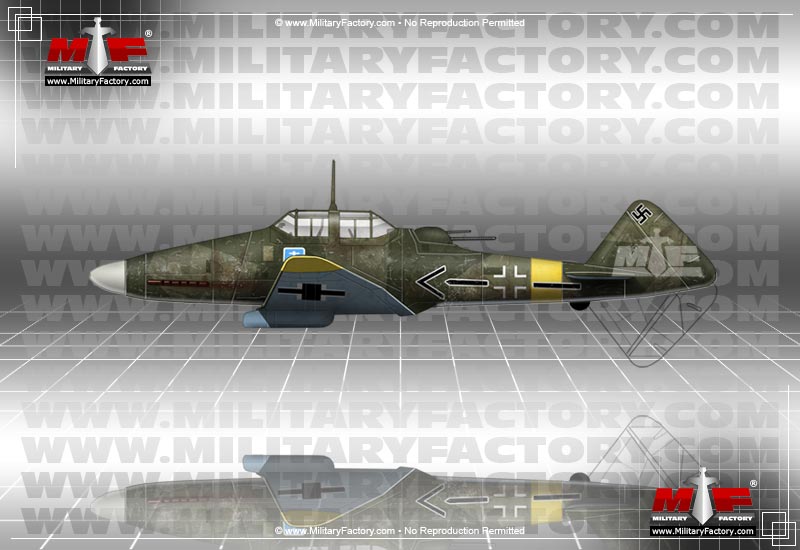
The abandoned Junkers Ju 187 was intended to replace the much-feared - though outclassed - Ju 87 Stuka in the dive bombing role for the German Luftwaffe.

Find a School Near You
Follow Military Factory on Facebook:
Trending on Military Factory:
Recent Articles:
Throughout the latter half of the 1930s and into the early 1940s, the Junkers Ju 87 "Stuka" dive bomber asserted itself as one of the more feared German Luftwaffe aircraft in the skies over Europe. The type was used to great effect in the German assaults against Poland, Norway, the Low Countries and France before attention turned to the invasion of Britain. It also played a role in the German invasion of the Soviet Union through Operation Barbarossa to begin the "East Front" as well as strikes against targets in North Africa and across the Mediterranean Theater. While the type proved itself more that capable for its intended role, its effectiveness waned in the wake of direct combat with intercepting enemy fighters serving to showcase its obvious vulnerabilities on a grand stage - particularly during the Battle of Britain in the summer of 1940. As it stood, the Ju 87 was a slow, unmaneuverable mount with severely limited defensive capabilities.

As such, the Junkers concern was charged with development of a similar-minded modern dive bomber, incorporating some of the excellent qualities inherent in the Ju 87 system. Key to this was retaining the two-man crew arrangement (including the rear gunner) and the identifiable inverted "gull-wing" wing design (sporting both anhedral and dihedral angles). A new fuselage design was drawn up which utilized a sloped frontal section offering up improved downward views over the engine mounting. The cockpit was centralized along the fuselage dorsal spine and a tapered empennage employed. Both the wings and fuselage would be called upon to bear the brunt of the intended bomb load. As in the Ju 87, the new design would make use of a rear gunner to defend the aircraft's vulnerable "six" region. A three-bladed propeller would be powered by a front-mounted Junkers Jumo 213A series 12-cylinder inverted-vee inline piston engine rated at 1,776 horsepower (this engine already in production and serving Focke-Wulf Fw 190 fighters and Junkers Ju 88 bombers). Overall dimensions included a wingspan of nearly 60 feet with a running length of 38.8 feet. The two crew would be seated in tandem (back-to-back) under an enclosed, framed cockpit. Armor would feature into the design to help protect the crew, engine and fuel stores from low-lying threats. The fuselage would be constructed of an all-metal substructure and skin.

Proposed fixed armament became a pair of 20mm MG 151/20 series cannons firing from the wing roots. Additionally, a 13mm MG 131 series machine gun as well as a 15mm MG 151/15 series cannon would be mounted to a dorsal turret at the rear. In terms of bomb load, the Ju 187 would be expected to carry a 1,100lb bomb along its fuselage centerline as well as smaller diameter bombs underwing for a most impressive and well-armed dive bomber design.

Key refinements greeted the new aircraft which was ultimately assigned the designation of "Ju 187". Unlike the Ju 87 before it, the Ju 187 was to be completed with a retractable undercarriage to help increase airflow and improve aerodynamics. This was of a traditional configuration involving two main landing gear legs and a tail wheel. One of the more ambitious aspects of the Ju 187 design was to be its "rotating" tail section which, when fixed in place, acted as a normal empennage unit. However, the rotating nature of its design would allow the tail section to point the vertical tail fin downwards (preserving the horizontal tail planes), allowing for unfettered views of oncoming enemy from the rear gunner's seat - thusly providing for an unobstructed firing arc and improving self-defense capabilities of the aircraft.

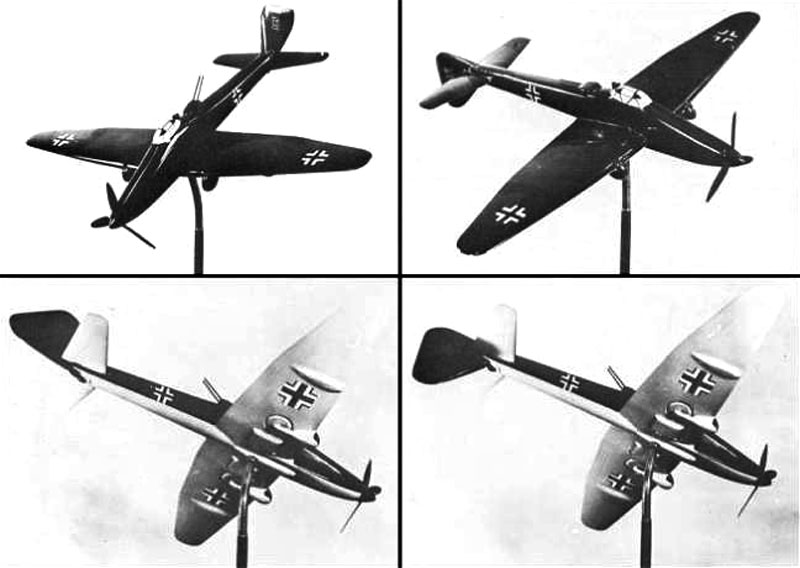
Work on the project was begun and wind tunnel testing on several model forms was underway. A full size mockup was also under construction when, in 1943, the Reich Air Ministry canceled the Ju 187 project. Apparently, the projected maximum speed of the fully bomb-laden aircraft was never expected to exceed that of the existing Ju 87s in service by much and, when coupled with the technological barrier presented by the rotating tail unit, the program projected too many questions to allow for further funding and development. The Ju 187 project was further hindered by the fact that the Messerschmitt Bf 109 and Focke-Wulf Fw 190 fighters - available in larger quantities by this point in the war - had been successfully converted to capable dive bombers in their own right, thusly negating the need for a new, costly and dedicated dive bomber design.
Text ©2003-2013 www.MilitaryFactory.com • All Rights Reserved • No Reproduction Permitted
MilitaryFactory.com does NOT sell equipment/weaponry. Material presented throughout this website is for historical and entertainment value and should not to be construed as usable for hardware restoration, maintenance or general operation. Please consult manufacturers for such information. Our disclaimer. Email corrections / Comments to MilitaryFactory at Gmail dot com.
Picture of Junkers Ju 187
Pic of the Junkers Ju 187
View All Images (2)

Specifications for the
Junkers Ju 187
Dive Bomber


Country of Origin: Nazi Germany
Manufacturer: Junkers - Nazi Germany
Initial Year of Service: 1943
Production: Not Available


Focus Model: Junkers Ju 187
Crew: 2


Length: 38.71ft (11.8m)
Width: 59.25ft (18.06m)
Height: 12.80ft (3.90m)
Weight (Empty): 9,921lbs (4,500kg)
Weight (MTOW): 16,535lbs (7,500kg)


Powerplant: 1 x Junkers Jumo 213A 12-cylinder inverted-vee inline piston engine developing 1,776 horsepower.


Maximum Speed: 249mph (400kmh; 216kts)
Maximum Range: 1,087miles (1,750km)
Service Ceiling: 24,606ft (7,500m; 4.7miles)
Rate-of-Climb: 0 feet per minute (0m/min)


Hardpoints: 5
Armament Suite:
PROPOSED:
2 x 20mm MG 151/20 cannons in wing roots
1 x 13mm MG 131 machine guns in dorsal turret
1 x 15mm MG 151/15 cannon in dorsal turret

OPTIONAL (proposed):
1 x 1,100lb bomb in semi-recessed bay underfuselage centerline and smaller diameter bombs held underwing.


Variants:
Ju 187 - Proposed Series Designation


Operators: Nazi Germany

ALL AIRCRAFT CATEGORIES

BY DECADE:


1900 to 1909
1910 to 1919
1920 to 1929
1930 to 1939
1940 to 1949
1950 to 1959
1960 to 1969
1970 to 1979
1980 to 1989
1990 to 1999
2000 to 2009
2010 to 2019
2020 to 2029
VIEW ALL
Compare Aircraft


BY TYPE:


Anti-Submarine Warfare (ASW)
Attack Helicopters
Bomber Aircraft
Medium Bombers
Heavy Bombers
Close-Air Support (CAS)
Commercial Aircraft
Dive Bombers
Electronic Warfare Aircraft (EWA)
Experimental / X-Planes
Fighter Aircraft
Floatplane Aircraft
Flying Boat Aircraft
Aerial Refueling Tankers
Helicopters (ALL)
Interceptor Aircraft
Multi-Role Aircraft
Navy Carrier Aircraft
Night Fighters
Reconnaissance / Scout
Search & Rescue (SAR)
Scout Helicopters
Special Purpose
Torpedo Bombers
Trainer Aircraft
Transport Aircraft
Transport Helicopters
Unmanned Aerial Vehicles (UAVs)
Unmanned Combat Air Vehicles (UCAVs)


COLLECTIONS:


4th Generation Fighter Aircraft
5th Generation Fighter Aircraft
US X-Planes
Classic US Warbirds
French Military Helicopters
Grumman "Cats"
Howard Hughes Aircraft
Indian Air Force
Israeli Air Force
Libyan Aircraft
Modern Chinese Aircraft
Modern Chinese Fighters
Modern Military Aircraft
Modern North Korean Aircraft
Modern Trainer Aircraft
Modern US Aircraft
Mikoyan Aircraft
Sukhoi Aircraft
Syrian Aircraft
Top 10 Fighter Aircraft of All Time


AIRCRAFT BY CONFLICT:


Arab-Israeli War (1948)
Cuban Missile Crisis (1959-1962)
Falklands War (1982)
Indo-Pak War (1965, 1971)
Iran-Iraq War (1980-1988)
Lebanon War (1982)
Operation Allied Force (1999)
Operation Desert Storm (1991)
Six Day War (1967)
Spanish Civil War (1936)
Soviet-Afghan War (1979-1989)
Yom Kippur War (1973)


MISCELLANEOUS:


Aircraft Cockpits
Aircraft Manufacturers List
Aircraft Timeline

WORLD WAR 2:


1939 Aircraft
1940 Aircraft
1941 Aircraft
1942 Aircraft
1943 Aircraft
1944 Aircraft
1945 Aircraft
1946 Aircraft
Australian Aircraft
Battle of Britain Aircraft
Bombers
Four-Engine Bombers
British Aircraft
British Bombers
British Transports
Dive Bombers
Canadian Aircraft
Fighters
Chinese Aircraft
French Aircraft
German Aircraft
German Fighters
German Flying Boats
German Jets
Secret Weapons of the Luftwaffe
Italian Aircraft
Imperial Japanese Aircraft
Imperial Japanese Fighters
Mitsubishi Bombers
Navy Aircraft
Pearl Harbor
Polish Aircraft
Romanian Aircraft
US Aircraft
US Bombers
US Navy Aircraft
Soviet Aircraft
Torpedo Bombers
Transport Aircraft
Tuskegee Airmen Aircraft
W.A.S.P. Aircraft
WW2 Aircraft Ranked by Speed
VIEW ALL


WORLD WAR 1:


1914 Aircraft
1915 Aircraft
1916 Aircraft
1917 Aircraft
1918 Aircraft
Aircraft Timeline
Austro-Hungarian Aircraft
Bomber Aircraft
British Aircraft
Fighters
Flying Boats
French Aircraft
Imperial German Aircraft
Italian Aircraft
Scout Aircraft
Russian Empire Aircraft
US Aircraft
WW1 Aircraft Ranked by Speed
VIEW ALL


KOREAN WAR:


Australian Aircraft
Korean War Aces
Korean War Jets
North Korean Aircraft
US Military Aircraft
VIEW ALL


VIETNAM WAR:


Helicopters
North Vietnam Air Force
US Airpower
VIEW ALL


COLD WAR:


1950s French Aircraft
British V-Bombers
Cold War Bombers
Soviet Aircraft
Soviet Bombers
Soviet Interceptors
Soviet Helicopters
Strategic Air Command
US Aircraft
US Bombers
US Interceptors
VIEW ALL

Site Disclaimer | Privacy Policy | Site Map | MF Origins


©2013 www.MilitaryFactory.com • Content ©2003-2013 MilitaryFactory.com • All Rights Reserved • Site Contact Email: militaryfactory at gmail dot com. The "Military Factory" name and MilitaryFactory.com logo are registered ® trademarks and protected by all applicable domestic and international intellectual property laws.


Top MF Stuff: 2013 Military Pay Scale | Military Ranks | WW2 Weapons | Sniper Rifles | Kts to Mph | WW1 Aircraft | Automatic Rifles | Aircraft Cockpits | Vietnam War Weapons | Main Battle Tanks | Submachine Guns | Shotguns | French Military Victories


Most photographic images appearing on this site are courtesy of the United States Department of Defense and are approved for public use. Other images acquired through the public domain. Digital art work courtesy of Dan Alex. Business Consulting by Kyle Williams. Material presented throughout this website is for historical and entertainment value and should not to be construed as usable for hardware restoration, maintenance or general operation. Please consult manufacturers for such information.


eXTReMe Tracker