Military Factory
Military Pay Chart
Global Firepower
Military Industrial Complex
Second World War
Home
Military Pay Scale
Military Ranks
Small Arms
Aircraft
Land Systems
Navy
Education
Military Factory Facebook Logo
flag of Confederate States

CSS Alabama Sloop-of-War (1862)

Authored By Staff Writer | Last Updated: 5/9/2013

Despite serving just two years during the American Civil War, the CSS Alabama established herself as a successful commerce raider for the South.

Find a School Near You
Follow Military Factory on Facebook:
Trending on Military Factory:
Recent Articles:
When war broke out between the States on April 12th, 1861, the South moved to send representatives throughout Europe in the hopes of procuring all manner of war-making goods. Commander James Dunwoody Bulloch was a Confederate agent based in England and guided to raise naval vessels for the burgeoning Confederate fleet. Funding was made possible through a local cotton broker - Fraser, Trenholm Company of Liverpool and, after securing the cruiser "Oreto" (to become the CSS Florida), Bulloch moved on a new design known under its hull number of "290". Payment for its construction was $250,000.

Hull 290 was built under the guise of a merchantman - the "Enrica" - at the shipyard of John Laird Songs & Company of Liverpool and put to water with a civilian crew on July 9th, 1862 so as to not raise notice. The crew set sail for the Azores to which the vessel changed hands to Captain Raphael Semmes and was formally armed, stocked with coal and took on food and supplies for the voyage ahead. Once at sea, Semmes commissioned the ship formally as the "CSS Alabama" on August 24th, 1862. She was granted the fighting motto of "Help Yourself and God Will Help You".

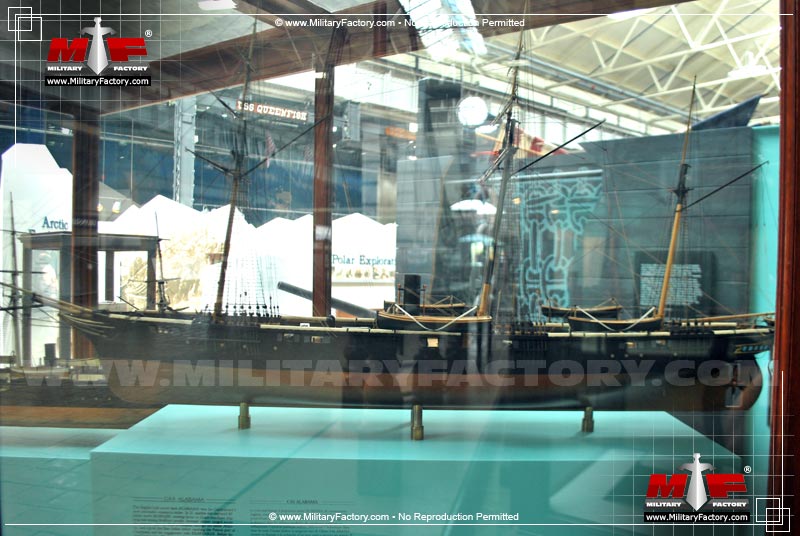
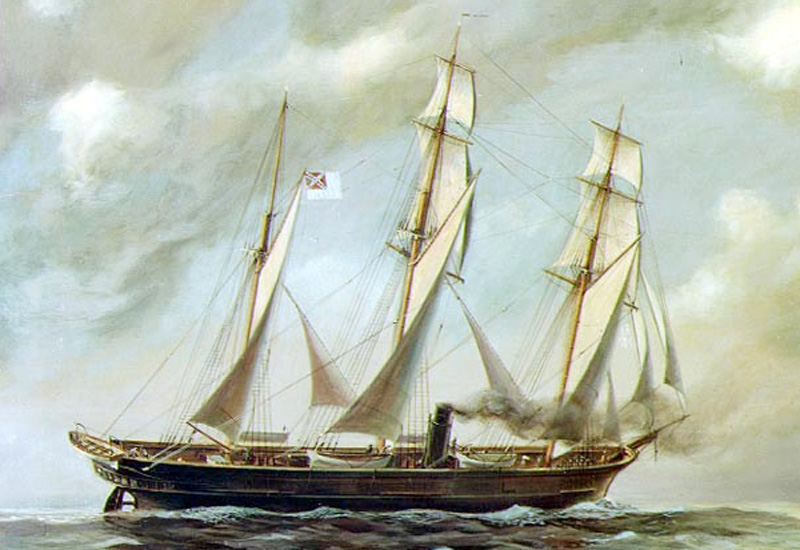
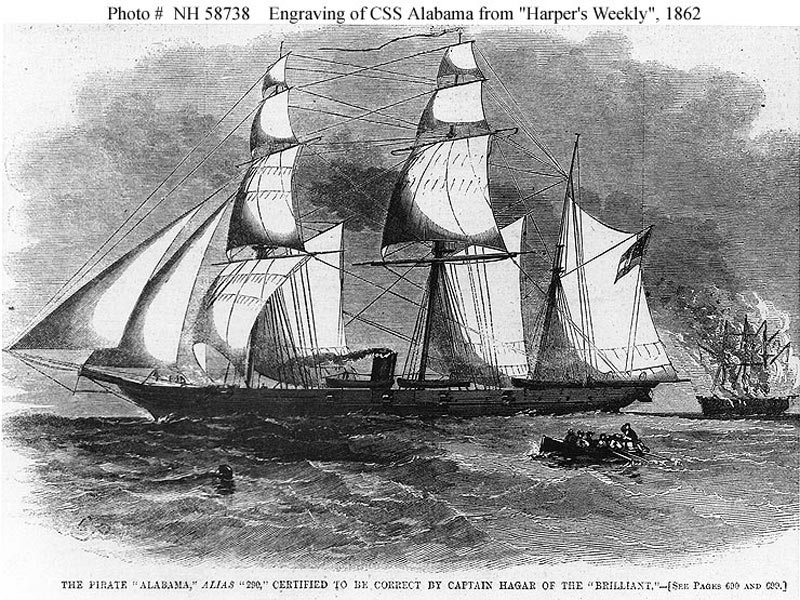
At her core, the CSS Alabama stood as a sloop-of-war designed around a steam engine and three full-sailed masts. She displaced at 1,050 tons with a running length of 220 feet, a beam of 31 feet, 8 inches and a draft of 17 feet, 8 inches. Her primary propulsion was 2 x HP horizontal coal-fed steam engines which provided up to 300 horsepower allowing for a maximum speed of 13 knots in ideal conditions. The sails were secondary in her design and utilized for propulsion when the engine was deemed unnecessary or low on coal. As a hybrid design of sail and steam, the CSS Alabama could utilize her sail arrangement in open seas in a conventional way while relying on her steam power for combat or during more precise maneuvering. Power was delivered to 1 x screw at the stern of the vessel and her crew complement included 145 personnel of which 24 were officers.

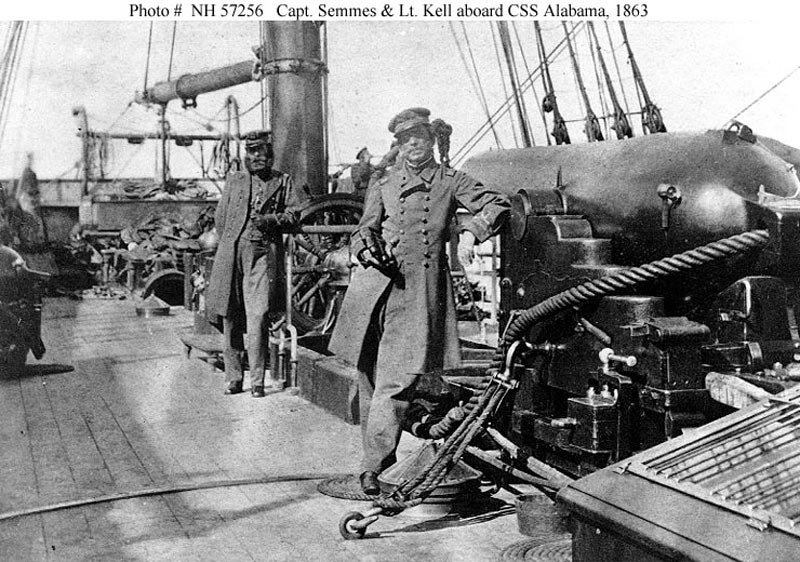
As a ship-of-war, the CSS Alabama was well-armed. Her primary battery were 6 x 32-pdr cannon set for broadside attacks. This was backed by a single 110-pdr Blakely gun and a single smoothbore 68-pdr cannon to which the former rested on the forecastle and the latter abaft of the mainmast. These were "pivot" installations which allowed each gun arcs-of-fire over the deck. However, the Blakely installation had the habit of overheating through prolonged use and would be utilized sparingly in combat. Her violent recoil was such that a lesser charge had to be used to protect the vessel and crew.

CSS Alabama immediately set out to patrol the whaling area around the Azores. From there, her primary role focused on control of the shipping routes across the Atlantic seaboard of the United States. The Confederate Navy understood, just as the Union Navy did, the importance of ocean access and control of vital waterways that would be key to ultimate victory. The CSS Alabama targeted incoming deliveries to the North and outbound grain deliveries headed for England in an effort to disrupt all manner of normalcy for the enemy. Ships were either captured or burned where they stood, making the CSS Alabama one of the more successful commerce raiders of the Confederate Navy. The Alabama successfully engaged the USS Hatteras off the coast of Galveston, Texas and took her crew prisoner.

She then headed across the Atlantic via the Caribbean, Brazil and rounding the southern tip of Africa before entering the Indian Ocean. She spent six months near the East Indies in the hunt for Union vessels and claimed seven such targets. She managed 40 merchantmen throughout all of 1863 of which many were destroyed. She docked at Singapore in December before putting back out to sea. After this tour, she rounded the south of Africa once again and made her way back to Europe, arriving at the port of Cherbourg, France on June 11th, 1864. Throughout her voyage, the CSS Alabama did not lose one man to injury or disease - an amazing feat considering the living/fighting conditions and medicine practices of the time. In all, the CSS Alabama managed to capture 65 Union merchantmen and board a further 447 other ships during her escapades.

The stop at Cherbourg was purely business for the CSS Alabama was in need of a major refit and overhaul. On June 14th, however, fate found the vessel in port when the Union Navy's USS Kearsarge identified the target it had been tracking for some time. The Kearsarge was a Mohican-class sloop-of-war herself and similarly powered through steam and three main masts. She was ordered through the emergency shipbuilding program for the Union Navy and launched in 1861, commissioned in January of 1862 and well-armed with 2 x 11" (280mm) Dahlgren smoothbore guns, 4 x 32-pdr cannon and 1 x 30-pdr Parrott rifled cannon.

The challenge had been laid and the CSS Alabama, full of the confidence that previous victories bring, sallied forth to meet the Kearsarge in one-to-one battle on June 19th. The battleground was moved out to sea to conform to international maritime laws (France was a neutral party during the American Civil War). The CSS Alabama was outweighed, numerically out-crewed and outgunned against the might of the well-trained USS Kearsarge and crew.

Alabama opened her guns to the Kearsarge as both vessels rounded to meet one another. The Kearsarge's crew remained patient and held fire until within range of 1,000 yards and let loose her own cannon fire. Each vessel took on their own respective tactical circles in an effort to "cross the bow" of the other and deliver a hefty full broadside stroke. The battle would last for approximately one hour as the two sides exchanged shots. The CSS Alabama took the brunt of the offerings and she was further done in by poor quality cannon balls and gun powder. The Kearsarge, on the other hand, fared much better thanks to additional armor protection by way of iron-coated sides (only known to the Alabama crew after-the-fact). The crew of the CSS Alabama managed to let off 150 cannon balls against the Kearsarge's 100 and it was only when one shot pierced the hull of the Alabama at the waterline that the situation turn for the worse. With the critical hit, the Alabama began taking on water and sinking. This forced Captain Semmes to order a surrender and the Alabama struck her colors in response. A surrender party was sent towards the Kearsarge to which rescue boats were, in turn, dispatched to take on Confederate prisoners. However, the response was slow and nearby vessels pitched in. An English yacht - the Deerhound - took to rescuing as many persons as possible and she was aided by French pilot boats finding themselves near the scene.

Captain Semmes and 41 of the crew were saved by the Deerhound and managed to escape the scene to England to avoid facing Union courts and treason counts. Such ended the glorious tenure of the CSS Alabama - a true raider by all accounts, sinking millions of dollars in Union property over the course of her short career. The CSS Alabama saw 21 of her crew wounded in the fighting with the Kearsarge though 9 crew were killed (according to the official record by Captain Semmes sent on June 21st, 1864 from Southampton to Flag Officer Samuel Barron of the CSS Navy in Paris).
Continue to Page 2 (of 2) >>
Text ©2003-2013 www.MilitaryFactory.com • All Rights Reserved • No Reproduction Permitted
MilitaryFactory.com does NOT sell equipment/weaponry. Material presented throughout this website is for historical and entertainment value and should not to be construed as usable for hardware restoration, maintenance or general operation. Please consult manufacturers for such information. Our disclaimer. Email corrections / Comments to MilitaryFactory at Gmail dot com.
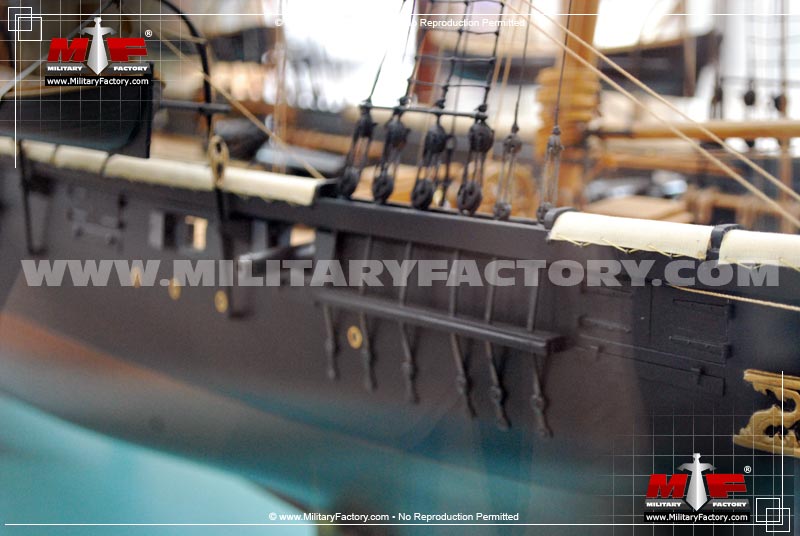
Picture of CSS Alabama
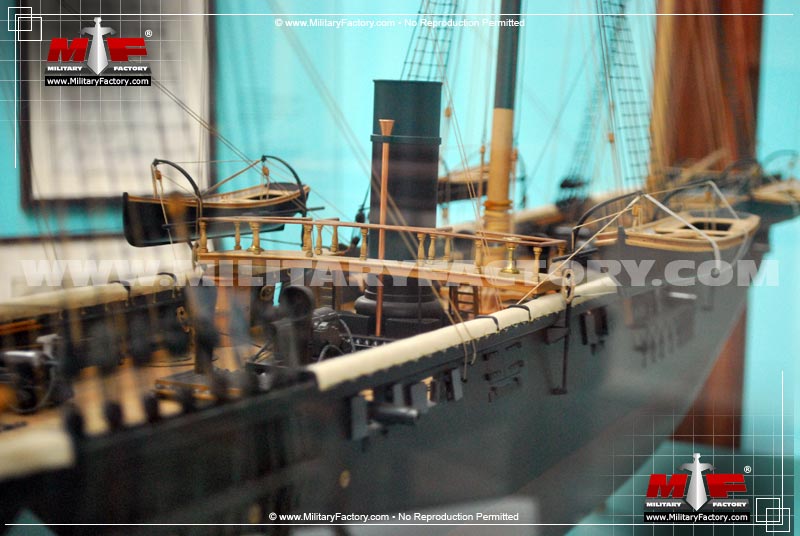
Pic of the CSS Alabama
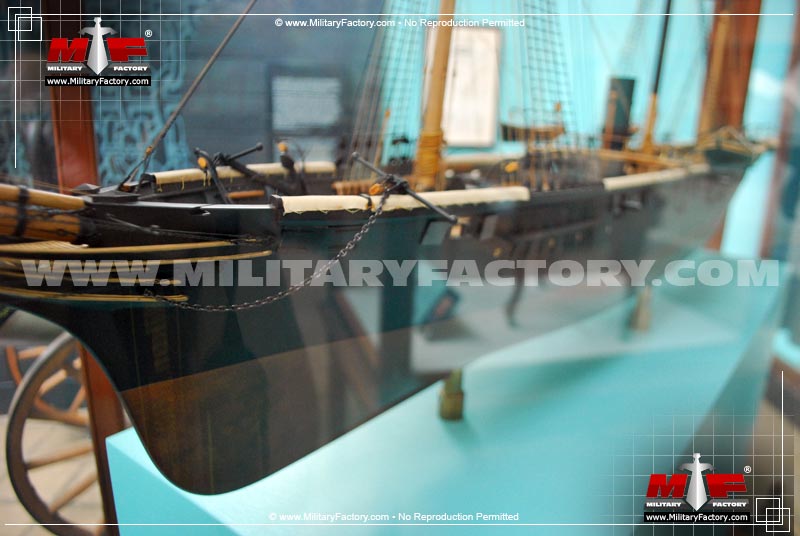
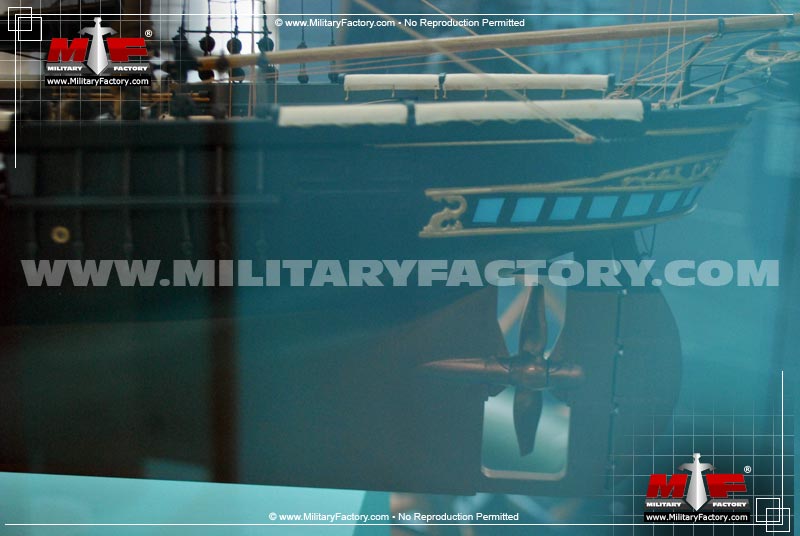
Image of the CSS Alabama
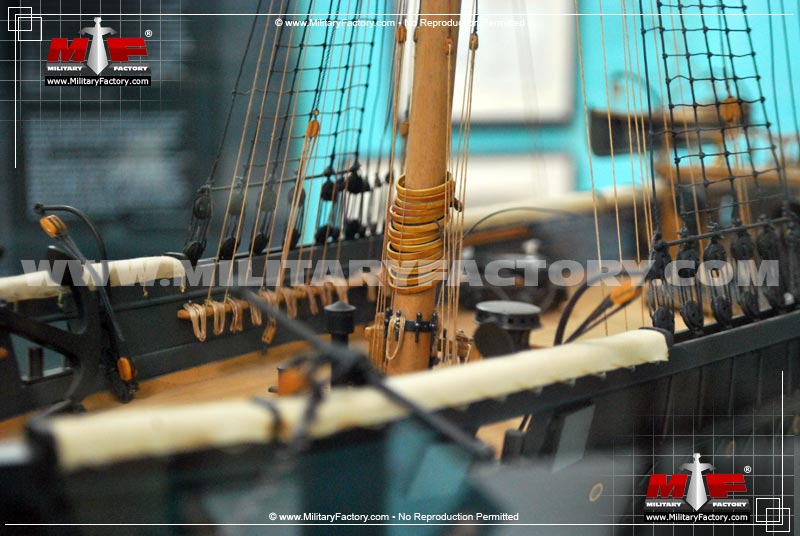
View All Images (3)

Specifications for the
CSS Alabama
Sloop-of-War


Country of Origin: Confederate States
Initial Year of Service: 1862
Operators: Confederate States


Crew: 145


Length: 220ft (67.06m)
Beam: 31.7ft (9.66m)
Draught: 17.7ft (5.39m)
Displacement: 1,050tons


Machinery: 2 x Horizontal steam engines developing 300 horsepower each driving 1 x propeller; three masts for sails.


Surface Speed: 13kts (15mph)
Range: Essentially Unlimited


Armament:
6 x 32-pdr cannons (broadside); 1 x 110-pdr Blakely cannon (deck); 1 x 68-pdr cannon (deck).


Ship Class: CSS Alabama
Number-in-Class: 1
Ships-in-Class: CSS Alabama

ALL NAVY SHIP CATEGORIES
Site Disclaimer | Privacy Policy | Site Map | MF Origins


©2013 www.MilitaryFactory.com • Content ©2003-2013 MilitaryFactory.com • All Rights Reserved • Site Contact Email: militaryfactory at gmail dot com. The "Military Factory" name and MilitaryFactory.com logo are registered ® trademarks and protected by all applicable domestic and international intellectual property laws.


Top MF Stuff: 2013 Military Pay Scale | Military Ranks | WW2 Weapons | Sniper Rifles | Kts to Mph | WW1 Aircraft | Automatic Rifles | Aircraft Cockpits | Vietnam War Weapons | Main Battle Tanks | Submachine Guns | Shotguns | French Military Victories


Most photographic images appearing on this site are courtesy of the United States Department of Defense and are approved for public use. Other images acquired through the public domain. Digital art work courtesy of Dan Alex. Business Consulting by Kyle Williams. Material presented throughout this website is for historical and entertainment value and should not to be construed as usable for hardware restoration, maintenance or general operation. Please consult manufacturers for such information.


eXTReMe Tracker